<?xml version="1.0" encoding="UTF-8"?><rss version="2.0"
	xmlns:content="http://purl.org/rss/1.0/modules/content/"
	xmlns:wfw="http://wellformedweb.org/CommentAPI/"
	xmlns:dc="http://purl.org/dc/elements/1.1/"
	xmlns:atom="http://www.w3.org/2005/Atom"
	xmlns:sy="http://purl.org/rss/1.0/modules/syndication/"
	xmlns:slash="http://purl.org/rss/1.0/modules/slash/"
	>

<channel>
	<title>CUSTOM &#8211; UseManuals</title>
	<atom:link href="http://usemanuals.com/custom/feed/" rel="self" type="application/rss+xml" />
	<link>https://usemanuals.com</link>
	<description>Owner&#039;s manuals for all sorts of products</description>
	<lastBuildDate>Thu, 20 Jul 2023 04:55:39 +0000</lastBuildDate>
	<language>en-US</language>
	<sy:updatePeriod>
	hourly	</sy:updatePeriod>
	<sy:updateFrequency>
	1	</sy:updateFrequency>
	<generator>https://wordpress.org/?v=6.7.2</generator>

<image>
	<url>https://usemanuals.com/wp-content/uploads/2025/02/favicon-32x32-2.png</url>
	<title>CUSTOM &#8211; UseManuals</title>
	<link>https://usemanuals.com</link>
	<width>32</width>
	<height>32</height>
</image> 
	<item>
		<title>CUSTOM P-RANGER Mobile Computer Manual</title>
		<link>https://usemanuals.com/custom/p-ranger-computer/</link>
		
		<dc:creator><![CDATA[ItsManual]]></dc:creator>
		<pubDate>Wed, 19 Jul 2023 17:04:56 +0000</pubDate>
				<category><![CDATA[CUSTOM]]></category>
		<guid isPermaLink="false">https://usemanuals.com/?p=168245</guid>

					<description><![CDATA[P-RANGER Mobile Computer INCREASE THE PRODUCTIVITY WITH P-RANGER AND OFFER AN ADVANCED SERVICE TO YOUR CUSTOMERS With the handheld computers of the P-RANGER family, you can improve the touch computing performances of the prosumer category.  The management of P-RANGER is easy and fast, thanks to Android 7 that offer a new intuitive platform guaranteeing to the user an extraordinary experience. All the business features of P-RANGER improve the abilities of the employees, maximizing productivity and reducing the time of the operative cycles. Moreover, the devices are reinforced with LTE data modules both for close and open environments. Choose P-RANGER to offer an advanced and cost-effective service to your customers! ACCESSORIES Single-slot cradle 4 slots cradle Vehicle cradle Battery 8000 mAh dedicated battery cover Pistol grip TP protective tempered glass Silicon case protection Car charger Charger TECHNICAL SHEET RP100 RP300 RP340 Waterproof IP67 Shockproof MIL-STD-810G OS Android™ 7.0 2D Scanner  ScanEngine SE4710 – 1D/2D Barcode ScanEngine SE4710 – 1D/2D Barcode Fingerprint  up to 5 fingerprint Box contents Terminal, hand strap, 4000 mAh battery, warranty card, user manual Camera Rear 8 Mpx Display 5″ 1280×720 HD DRAGONTRAIL/AGC CPU MTK 6753 64Bit/8Core ARM, Cortex-A53 1,5 GHz Storage ROM+RAM 16 GB + 2 GB NFC Integrated GSM B5/850; B8/900; B3/1800; B2/1900 3G WCDMA B1/2100; B2/1900; B5/850; B8/900; CDMA2000/EVDO 3G:TD/SCDMA 4G LTE FDD = B1/2100; B3/1800; B7/2600; B20/800; TDD-LTE = B38/B39/B40/B41 SIM Card 2 Nano Sim (1st 2G/3G/4G (LTE Europe) – 2nd 2G/3G) Wi-Fi/Navigation 2.4/5 GHz – Integrated IEEE 802.11 a/b/g/n Bluetooth 4 1D/2D Scanner UPC/EAN, Bookland EAN, UCC Coupon Code, ISSN EAN, Code 128, GS1-128, ISBT 128, Code 39, Trioptic Code 39, Code 32, Code 93, Code 11, PDF417, MicroPDF 417, Composite, RSS, TLC-39, Datamatrix, QR code, Micro QR code, Aztec, Maxi Code, Postal Codes, US PostNet, US Planet, UK Postal, Australian Postal, Japan Postal, Dutch Postal, etc. Sensors 3D accelerator, E-compass, proximity sensor, light sensor supported Battery 4000 mAh (optional 8000mAh) USB ports Type-C T-FLASH SD up to 32GB Operating temperature -10° C to 40°C Storage temperature -20° C to 60°C Drop resistance 122 cm Weight (Without battery) 177gr,186gr,189gr Dimensions 165 mm (W) × 76 mm (H) × 15,6 mm (D) MODELS 93DKZ012900L33 RUGGED HANDHELD P-RANGER 5″ ANDR 7 RP100 93DKZ013000L33 RUGGED HANDHELD P-RANGER 5″ ANDR 7 SCANNER RP300 93DKZ013100L33 RUGGED HANDHELD P-RANGER 5″ ANDR 7 SCANNER FP RP340 CUSTOM SPA – Via Berettine, 2 – 43010 Fontevivo PR – VAT: IT02498250345 – TEL: +39 0521 680111 – FAX: +39 0521 610701 – UNIQUE CODE: TI80WI0 The technical data on this website are not binding and may be changed without advanced notice. Last update: 17 March 2020 www.custom.biz – info@custom.biz Follow us: [...]<p><a class="btn btn-secondary understrap-read-more-link" href="https://usemanuals.com/custom/p-ranger-computer/">Read More...</a></p>]]></description>
										<content:encoded><![CDATA[<p><img decoding="async" src="https://usemanuals.com/wp-content/uploads/2023/07/CUSTOM-logo.webp" /><strong>P-RANGER</strong><br />
<strong>Mobile Computer</strong></p>
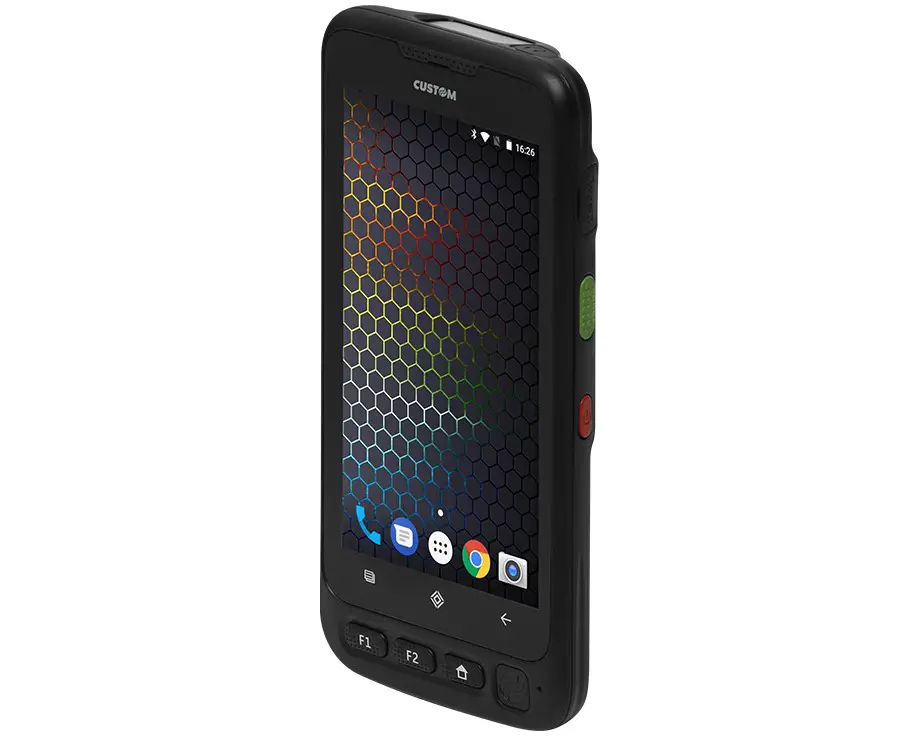
<p><img decoding="async" src="https://usemanuals.com/wp-content/uploads/2023/07/CUSTOM-P-RANGER-Mobile-Computer-.webp" /></p>
<p><strong>INCREASE THE PRODUCTIVITY WITH P-RANGER AND OFFER AN ADVANCED SERVICE TO YOUR CUSTOMERS</strong><br />
With the handheld computers of the P-RANGER family, you can improve the touch computing performances of the prosumer category.  The management of P-RANGER is easy and fast, thanks to Android 7 that offer a new intuitive platform guaranteeing to the user an extraordinary experience. All the business features of P-RANGER improve the abilities of the employees, maximizing productivity and reducing the time of the operative cycles. Moreover, the devices are reinforced with LTE data modules both for close and open environments. Choose P-RANGER to offer an advanced and cost-effective service to your customers!</p>
<p><img decoding="async" src="https://usemanuals.com/wp-content/uploads/2023/07/CUSTOM-P-RANGER-Mobile-Computer-Parts.webp" /></p>
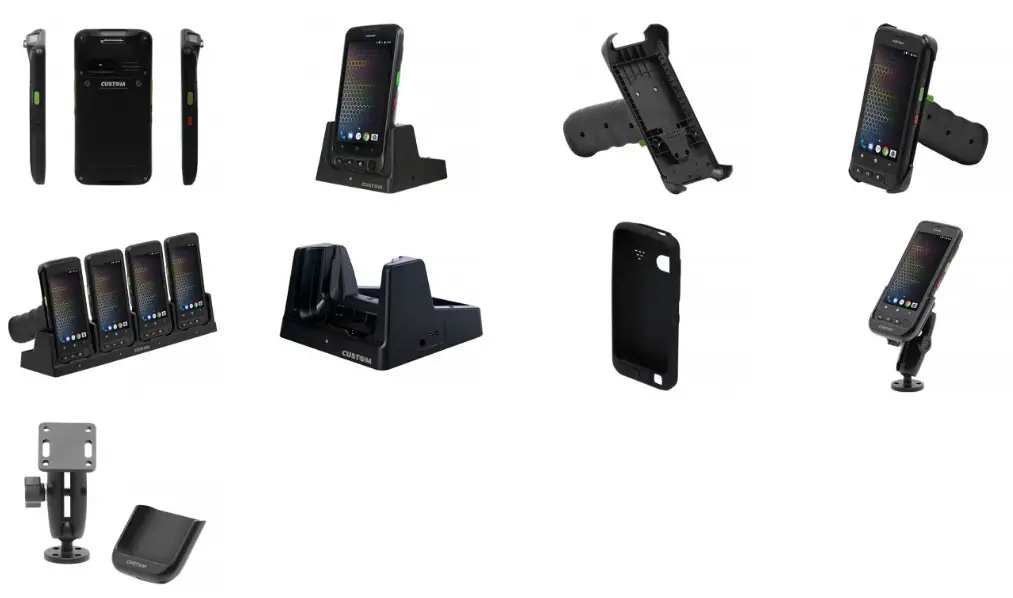
<h4>ACCESSORIES</h4>
<ul>
<li>Single-slot cradle</li>
<li>4 slots cradle</li>
<li>Vehicle cradle</li>
<li>Battery 8000 mAh dedicated battery cover</li>
<li>Pistol grip</li>
<li>TP protective tempered glass</li>
<li>Silicon case protection</li>
<li>Car charger</li>
<li>Charger</li>
</ul>
<p><img decoding="async" src="https://usemanuals.com/wp-content/uploads/2023/07/CUSTOM-logo-2.webp" /></p>
<h4>TECHNICAL SHEET</h4>
<table width="1427">
<tbody>
<tr>
<td width="57"></td>
<td width="208">RP100 RP300 RP340</td>
</tr>
<tr>
<td>Waterproof</td>
<td>IP67</td>
</tr>
<tr>
<td>Shockproof</td>
<td>MIL-STD-810G</td>
</tr>
<tr>
<td>OS</td>
<td>Android™ 7.0</td>
</tr>
<tr>
<td>2D Scanner</td>
<td width="208"> ScanEngine SE4710 – 1D/2D Barcode<br />
ScanEngine SE4710 – 1D/2D Barcode</td>
</tr>
<tr>
<td>Fingerprint</td>
<td width="208"> up to 5 fingerprint</td>
</tr>
<tr>
<td>Box contents</td>
<td width="208">Terminal, hand strap, 4000 mAh battery, warranty card, user manual</td>
</tr>
<tr>
<td>Camera</td>
<td>Rear 8 Mpx</td>
</tr>
<tr>
<td>Display</td>
<td>5″ 1280×720 HD DRAGONTRAIL/AGC</td>
</tr>
<tr>
<td>CPU</td>
<td>MTK 6753 64Bit/8Core ARM, Cortex-A53 1,5 GHz</td>
</tr>
<tr>
<td width="57">Storage ROM+RAM</td>
<td>16 GB + 2 GB</td>
</tr>
<tr>
<td>NFC</td>
<td>Integrated</td>
</tr>
<tr>
<td>GSM</td>
<td>B5/850; B8/900; B3/1800; B2/1900</td>
</tr>
<tr>
<td>3G WCDMA</td>
<td>B1/2100; B2/1900; B5/850; B8/900; CDMA2000/EVDO 3G:TD/SCDMA</td>
</tr>
<tr>
<td>4G LTE</td>
<td>FDD = B1/2100; B3/1800; B7/2600; B20/800; TDD-LTE = B38/B39/B40/B41</td>
</tr>
<tr>
<td>SIM Card</td>
<td>2 Nano Sim (1st 2G/3G/4G (LTE Europe) – 2nd 2G/3G)</td>
</tr>
<tr>
<td>Wi-Fi/Navigation</td>
<td>2.4/5 GHz – Integrated IEEE 802.11 a/b/g/n</td>
</tr>
<tr>
<td>Bluetooth</td>
<td>4</td>
</tr>
<tr>
<td>1D/2D Scanner</td>
<td width="208">UPC/EAN, Bookland EAN, UCC Coupon Code, ISSN EAN, Code 128, GS1-128, ISBT 128, Code 39, Trioptic Code 39, Code 32, Code 93, Code 11, PDF417, MicroPDF 417, Composite, RSS, TLC-39, Datamatrix, QR code, Micro QR code, Aztec, Maxi<br />
Code, Postal Codes, US PostNet, US Planet, UK Postal, Australian Postal, Japan Postal, Dutch Postal, etc.</td>
</tr>
<tr>
<td>Sensors</td>
<td>3D accelerator, E-compass, proximity sensor, light sensor supported</td>
</tr>
<tr>
<td>Battery</td>
<td>4000 mAh (optional 8000mAh)</td>
</tr>
<tr>
<td>USB ports</td>
<td>Type-C</td>
</tr>
<tr>
<td>T-FLASH</td>
<td>SD up to 32GB</td>
</tr>
<tr>
<td width="57">Operating temperature</td>
<td>-10° C to 40°C</td>
</tr>
<tr>
<td width="57">Storage temperature</td>
<td>-20° C to 60°C</td>
</tr>
<tr>
<td>Drop resistance</td>
<td>122 cm</td>
</tr>
<tr>
<td width="57">Weight (Without battery)</td>
<td width="208">177gr,186gr,189gr</td>
</tr>
<tr>
<td width="57">Dimensions</td>
<td>165 mm (W) × 76 mm (H) × 15,6 mm (D)</td>
</tr>
</tbody>
</table>
<h4>MODELS</h4>
<table width="1225">
<tbody>
<tr>
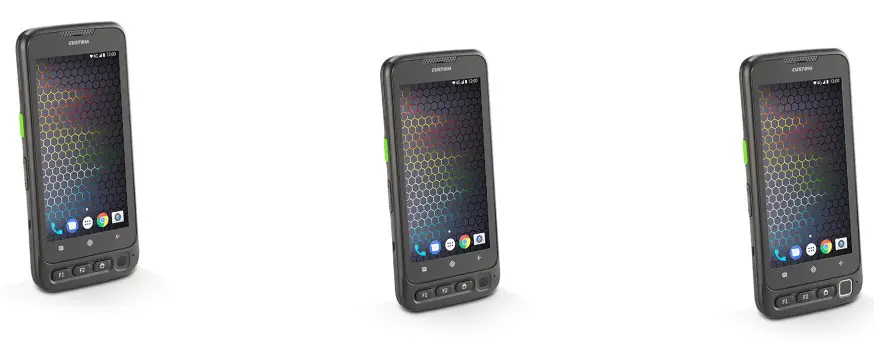
<td colspan="3" width="1225"><img decoding="async" src="https://usemanuals.com/wp-content/uploads/2023/07/CUSTOM-P-RANGER-Mobile-Computer-Model.webp" /></td>
</tr>
<tr>
<td><strong>93DKZ012900L33</strong><br />
RUGGED HANDHELD P-RANGER 5″<br />
ANDR 7 RP100</td>
<td><strong>93DKZ013000L33</strong><br />
RUGGED HANDHELD P-RANGER<br />
5″ ANDR 7 SCANNER RP300</td>
<td><strong>93DKZ013100L33</strong><br />
RUGGED HANDHELD P-RANGER 5″<br />
ANDR 7 SCANNER FP RP340</td>
</tr>
</tbody>
</table>
<p>CUSTOM SPA – Via Berettine, 2 – 43010 Fontevivo PR – VAT: IT02498250345 – TEL: +39 0521 680111 – FAX: +39 0521 610701 – UNIQUE CODE:<br />
TI80WI0<br />
The technical data on this website are not binding and may be changed without advanced notice.<br />
Last update: 17 March 2020</p>
<p><a href="http://www.custom.biz/" target="_blank" rel="noopener">www.custom.biz</a> – <a href="mailto:info@custom.biz">info@custom.biz</a></p>
<p>Follow us: <img decoding="async" src="https://usemanuals.com/wp-content/uploads/2023/07/Link-1.webp" /></p>
<form id="commentform" class="comment-form" action="https://manuals.plus/wp-comments-post.php" method="post" novalidate="">
<p class="form-submit">
</form>
]]></content:encoded>


			</item>
		<item>
		<title>CUSTOM P3 Retail Printer Manual</title>
		<link>https://usemanuals.com/custom/p3-retail-printer/</link>
		
		<dc:creator><![CDATA[ItsManual]]></dc:creator>
		<pubDate>Thu, 20 Jul 2023 04:55:39 +0000</pubDate>
				<category><![CDATA[CUSTOM]]></category>
		<guid isPermaLink="false">https://usemanuals.com/?p=169233</guid>

					<description><![CDATA[P3 Retail Printer View Fullscreen USER MANUAL P3 CUSTOM S.p.A. Via Berettine 2/B 43010 Fontevivo (PARMA) – Italy Tel. : +39 0521-680111 Fax : +39 0521-610701 http: www.custom.biz Customer Service Department: www.custom4u.it © 2020 CUSTOM S.p.A. ­ Italy. All rights reserved. Total or partial reproduction of this manual in whatever form, whether by printed or electronic means, is forbidden. While guaranteeing that the information contained in it has been carefully checked, CUSTOM S.p.A. and other entities utilized in the realization of this manual bear no responsibility for how the manual is used. Information regarding any errors found in it or suggestions on how it could be improved are appreciated. Since products are subject to continuous check and improvement, CUSTOM S.p.A. reserves the right to make changes in information containedinthismanualwithoutpriornotiication. The pre-installed multimedia contents are protected from Copyright CUSTOM S.p.A. Other company and product names mentioned herein may be trademarks of their respective companies. Mention of third-party products is for informational purposes only and constitutes neither an endorsement nor a recommendation. CUSTOM S.p.A. assumes no responsibility with regard to the performance or use of these products. THE IMAGES USED IN THIS MANUAL ARE USED AS AN ILLUSTRATIVE EXAMPLES. THEY COULDN’T REPRODUCE THE DESCRIBED MODEL FAITHFULLY. UNLESS OTHERWISE SPECIFIED, THE INFORMATION GIVEN IN THIS MANUAL ARE REFERRED TO ALL MODELS IN PRODUCTION AT THE ISSUE DATE OF THIS DOCUMENT. GENERAL INSTRUCTIONS CUSTOM S.p.A. declines all responsibility for accidents or damage to persons or property occurring as a result of tampering, structural or functional modiications, unsuitable or incorrect installations, environments not in keeping with the equipment’s protection degree or with the required temperature and humidity conditions, failure to carry out maintenance and periodical inspections and poor repair work. GENERAL SAFETY INFORMATION Your attention is drawn to the following actions that could compromise the characteristics of the product: · Read and retain the instructions which follow. · Follow all indications and instructions given on the device. · Make sure that the surface on which the device rests is stable. If it is not, the device could fall, seriously damaging it. · Make sure that the device rests on a hard (nonpadded) surface and that there is suficient ventilation. · Donotixindissolublythedeviceoritsaccessoriessuchaspowersuppliesunlessspeciically provided in this manual. · When positioning the device, make sure cables do not get damaged. · [Only OEM equipment] The equipment must be installed in a kiosk or system that provides mechanical,electricalandireprotection. · The mains power supply must comply with the rules in force in the Country where you intend to install the equipment. · Make sure that there is an easily-accessible outlet with a capacity of no less than 10A closely to where the device is to be installed. · Make sure the power cable provided with the appliance, or that you intend to use is suitable with the wall socket available in the system. · Make sure the electrical system that supplies power to the device is equipped with a ground wire and is protected by a differential switch. · Before any type of work is done on the machine, disconnect the power supply. · Use the type of electrical power supply indicated on the device label. · These devices are intended to be powered by a separately certiied power module having an SELV, non-energy hazardous output. (IEC60950-1 second edition). · [Only POS equipment] The energy to the equipment must be provided by power supply approved by CUSTOM S.p.A. · Take care the operating temperature range of equipment and its ancillary components. · Do not block the ventilation openings. · Do not insert objects inside the device as this could cause short-circuiting or damage components that could jeopardize printer functioning. · Do not carry out repairs on the device yourself, except for the normal maintenance operations given in the user manual. · The equipment must be accessible on these components only to trained, authorized personnel. · Periodically perform scheduled maintenance on the device to avoid dirt build-up that could compromise the correct, safe operation of the unit. · Do not touch the head heating line with bare hands or metal objects. Do not perform any operation inside the printer immediately after printing because the head and motor tend to become very hot. · Use consumables approved by CUSTOM S.p.A. THE CE MARK AFFIXED TO THE PRODUCT CERTIFY THAT THE PRODUCT SATISFIES THE BASIC SAFETY REQUIREMENTS. The device is in conformity with the essential Electromagnetic Compatibility and Electric Safety requirements laid down in Directives 2014/30/EU and 2014/35/EU inasmuch as it was designed in conformity with the provisions laid down in the following Standards: · EN 55032 (Limits and methods of measure- ments of radio disturbance characteristics of Information Technology Equipment) · EN 55024 (Information Technology Equipment ­ Immunity characteristics ­ Limits and methods of measurement) · EN 60950-1 (Safety of information equipment including electrical business equipment) The device is in conformity with the essential requirements laid down in Directives 2014/53/EU about devices equipped with intentional radiators The Declaration of Conformity and other available certiications can be downloaded from the site www.custom4u.it. GUIDELINES FOR THE DISPOSAL OF THE PRODUCT The crossed-out rubbish bin logo means that used electrical and electronic products shall NOT be mixed with unsorted municipal waste. For more detailed information about recycling of this product, refer to the instructions of your country for the disposal of these products. · Do not dispose of this equipment as miscel- laneous solid municipal waste, but arrange to have it collected separately. · The re-use or correct recycling of the electronic and electrical equipment (EEE) is important in order to protect the environment and the wellbeing of humans. · In accordance with European Directive WEEE 2012/19/EU, special collection points are available to which to deliver waste electrical and electronic equipment and the equipment can also be handed over to a distributor at the moment of purchasing a new equivalent type. · The public administration and producers of electrical and electronic equipment are involved in facilitating the processes of the re-use and recovery of waste electrical and electronic equipment through the organisation of collection activities and the use of appropriate planning arrangements. · Unauthorised disposal of waste electrical and electronic equipment is punishable by law with the appropriate penalties. The format used for this manual improves use of natural resources reducing the quantity of necessary paper to print this copy. MANUAL For further information about the use of “PrinterSet” tool refer to the manual with code 78200000001800 TABLE OF CONTENTS 1 INTRODUCTION . . . . . . . . . . . . . . . . . . . . . . . . . . . . . . . . . . . . . . . . . . . . . . . . . . . . . . . . . . . . . . 9 2 DESCRIPTION . . . . . . . . . . . . . . . . . . . . . . . . . . . . . . . . . . . . . . . . . . . . . . . . . . . . . . . . . . . . . . . 11 2.1 Box contents . . . . . . . . . . . . . . . . . . . . . . . . . . . . . . . . . . . . . . . . . . . . . . . . . . . . . . . . . . . . . . . . . . . . . . 11 2.2 Device components: external views . . . . . . . . . . . . . . . . . . . . . . . . . . . . . . . . . . . . . . . . . . . . . . . . . . . . 12 2.3 Device components: internal view . . . . . . . . . . . . . . . . . . . . . . . . . . . . . . . . . . . . . . . . . . . . . . . . . . . . . 13 2.4 Device label . . . . . . . . . . . . . . . . . . . . . . . . . . . . . . . . . . . . . . . . . . . . . . . . . . . . . . . . . . . . . . . . . . . . . . 14 2.5 Key functions: power up . . . . . . . . . . . . . . . . . . . . . . . . . . . . . . . . . . . . . . . . . . . . . . . . . . . . . . . . . . . . . 15 2.6 Key functions: standby . . . . . . . . . . . . . . . . . . . . . . . . . . . . . . . . . . . . . . . . . . . . . . . . . . . . . . . . . . . . . . 16 2.7 Status messages . . . . . . . . . . . . . . . . . . . . . . . . . . . . . . . . . . . . . . . . . . . . . . . . . . . . . . . . . . . . . . . . . . 17 3 INSTALLATION . . . . . . . . . . . . . . . . . . . . . . . . . . . . . . . . . . . . . . . . . . . . . . . . . . . . . . . . . . . . . . . 19 3.1 Wall mounting . . . . . . . . . . . . . . . . . . . . . . . . . . . . . . . . . . . . . . . . . . . . . . . . . . . . . . . . . . . . . . . . . . . . . 19 3.2 Connections . . . . . . . . . . . . . . . . . . . . . . . . . . . . . . . . . . . . . . . . . . . . . . . . . . . . . . . . . . . . . . . . . . . . . . 20 3.3 Pinout . . . . . . . . . . . . . . . . . . . . . . . . . . . . . . . . . . . . . . . . . . . . . . . . . . . . . . . . . . . . . . . . . . . . . . . . . . . 21 3.4 Driver and SDK. . . . . . . . . . . . . . . . . . . . . . . . . . . . . . . . . . . . . . . . . . . . . . . . . . . . . . . . . . . . . . . . . . . . 25 4 OPERATION . . . . . . . . . . . . . . . . . . . . . . . . . . . . . . . . . . . . . . . . . . . . . . . . . . . . . . . . . . . . . . . . . . 27 4.1 Opening device cover . . . . . . . . . . . . . . . . . . . . . . . . . . . . . . . . . . . . . . . . . . . . . . . . . . . . . . . . . . . . . . . 27 4.2 Switch the device on/off . . . . . . . . . . . . . . . . . . . . . . . . . . . . . . . . . . . . . . . . . . . . . . . . . . . . . . . . . . . . . 28 4.3 Loading the paper roll . . . . . . . . . . . . . . . . . . . . . . . . . . . . . . . . . . . . . . . . . . . . . . . . . . . . . . . . . . . . . . . 29 5 CONFIGURATION. . . . . . . . . . . . . . . . . . . . . . . . . . . . . . . . . . . . . . . . . . . . . . . . . . . . . . . . . . . . 31 5.1 Conigurationbykeys . . . . . . . . . . . . . . . . . . . . . . . . . . . . . . . . . . . . . . . . . . . . . . . . . . . . . . . . . . . . . . . 31 5.2 Conigurationbysoftware . . . . . . . . . . . . . . . . . . . . . . . . . . . . . . . . . . . . . . . . . . . . . . . . . . . . . . . . . . . . 33 5.3 Device status . . . . . . . . . . . . . . . . . . . . . . . . . . . . . . . . . . . . . . . . . . . . . . . . . . . . . . . . . . . . . . . . . . . . . 35 5.4 Communication parameters . . . . . . . . . . . . . . . . . . . . . . . . . . . . . . . . . . . . . . . . . . . . . . . . . . . . . . . . . . 36 5.5 Operation parameters. . . . . . . . . . . . . . . . . . . . . . . . . . . . . . . . . . . . . . . . . . . . . . . . . . . . . . . . . . . . . . . 38 6 MAINTENANCE . . . . . . . . . . . . . . . . . . . . . . . . . . . . . . . . . . . . . . . . . . . . . . . . . . . . . . . . . . . . . . 41 6.1 Autocutter jam. . . . . . . . . . . . . . . . . . . . . . . . . . . . . . . . . . . . . . . . . . . . . . . . . . . . . . . . . . . . . . . . . . . . . 41 6.2 Planning of cleaning operations . . . . . . . . . . . . . . . . . . . . . . . . . . . . . . . . . . . . . . . . . . . . . . . . . . . . . . . 44 6.3 Cleaning . . . . . . . . . . . . . . . . . . . . . . . . . . . . . . . . . . . . . . . . . . . . . . . . . . . . . . . . . . . . . . . . . . . . . . . . . 45 6.4 Firmware upgrade. . . . . . . . . . . . . . . . . . . . . . . . . . . . . . . . . . . . . . . . . . . . . . . . . . . . . . . . . . . . . . . . . . 48 7 7 SPECIFICATIONS. . . . . . . . . . . . . . . . . . . . . . . . . . . . . . . . . . . . . . . . . . . . . . . . . . . . . . . . . . . . 51 7.1 Hardwarespeciications . . . . . . . . . . . . . . . . . . . . . . . . . . . . . . . . . . . . . . . . . . . . . . . . . . . . . . . . . . . . . 51 7.2 Characterspeciications . . . . . . . . . . . . . . . . . . . . . . . . . . . . . . . . . . . . . . . . . . . . . . . . . . . . . . . . . . . . . 54 7.3 Device dimensions . . . . . . . . . . . . . . . . . . . . . . . . . . . . . . . . . . . . . . . . . . . . . . . . . . . . . . . . . . . . . . . . . 55 7.4 Power supply and power cord dimensions . . . . . . . . . . . . . . . . . . . . . . . . . . . . . . . . . . . . . . . . . . . . . . . 56 7.5 Set di caratteri in emulazione CUSTOM/POS . . . . . . . . . . . . . . . . . . . . . . . . . . . . . . . . . . . . . . . . . . . . 58 8 CONSUMABLES . . . . . . . . . . . . . . . . . . . . . . . . . . . . . . . . . . . . . . . . . . . . . . . . . . . . . . . . . . . . . 61 9 ACCESSORIES . . . . . . . . . . . . . . . . . . . . . . . . . . . . . . . . . . . . . . . . . . . . . . . . . . . . . . . . . . . . . . 63 10 TECHNICAL SERVICE . . . . . . . . . . . . . . . . . . . . . . . . . . . . . . . . . . . . . . . . . . . . . . . . . . . . . 65 8 1 INTRODUCTION This document is divided into sections and chapters. Each chapter can be reached by the index at the beginning of this document. The index can be reached by the button on each page as shown in the diagram below. Link to table of contents Notes reference Numbered title for chapter Numbered title for paragraph Information valid for devices AAAA, BBBB, CCC Information valid for devices AAAA, BBBB Information valid for device CCCC 5 CONFIGURATION 5.1 Setup parameters When the printer is turned on it performs a self-test and reset routine(1) that checks and initializes the following electronic and mechanical components. During power-up, if the LF LINE FEED key is held down, the printer enters the autotest routine and prints out the Setup report. The printer permits the configuration of default parameters. AAAA, BBBB When the printer is turned on it performs a self-test and reset routine that checks and initializes the following electronic and mechanical components. CCCC During power-up, if the LF LINE FEED key is held down, the printer enters the autotest routine and prints out the Setup report. The printer permits the configuration of default parameters. Useful information to not compromise devices operation Generic information or suggestions for the use of the devices Information or suggestions related to specific operations ATTENTION: Respect power supply polarity. NOTES: All the dimensions shown in figures are in millimetres. (1) For the keys functions refer to the chapter 2. 9 10 2 DESCRIPTION 2.1 Box contents Remove the device from its carton being careful not to damage the packing material so that it may be re-used if the device is to be transported in the future. Make sure that all the components illustrated below are present and that there are no signs of damage. If there are, contact customer service. 1. Documentation (Short guide) 2. AC power supply 3. Standard AC power cord or US market AC power cord 4. Device 1 2 3 4 11 2.2 Device components: external views 1. Paper compartment cover opening key 2. Paper out 3. FEED key 4. ON/OFF key 5. RS232 serial port 6. USB port 7. Ethernet port 8. Power supply port 9. Drawer port 10. Status LED 11. Paper compartment cover 1 11 2 3 10 4 5 6 9 7 8 12 2.3 Device components: internal view 1. Platen roller 2. Paper presence sensor 3. Printhead with temperature sensor 4. Autocutter 1 4 3 2 13 2.4 Device label PC = Product code (14 digits) SN = Serial number HW = Hardware release XXXXXXXXXXXXXX R&#60;x&#62; 0000000000000000 PC SN HW 14 2.5 Key functions: power up Hold down POWER UP Hold down print SETUP report Fast push Fast push select TEST TYPE Logo Test Embedded Font Test: – PC437 only – all code pages Chinese Font Test Fast push Fast push Enter the skip the SETUP PROCEDURE SETUP PROCEDURE Fast push Fast push next parameter perform TEST Fast push Fast push modify selected parameter next parameter exit from DEVICE TEST select TEST TYPE 15 2.6 Key functions: standby Fast push STANDBY Fast push Advance the paper (preset length) Printing demo ticket 16 2.7 Status messages The status LED indicates hardware status of device. Given in the table below are the various LED signals and the corresponding device status. STATUS LED – GREEN GREEN COMMUNICATION STATUS GREEN UNRECOVERABLE ERROR OFF ON x 2 x 3 x 4 x 5 x 6 x 7 x 8 x 9 x 11 DESCRIPTION DEVICE OFF DEVICE ON: NO ERROR PRINTHEAD OVERHEATED PAPER END POWER SUPPLY VOLTAGE INCORRECT RECEPTION ERROR (PARITY, FRAME ERROR, OVERRUN ERROR) COMMAND NOT RECOGNIZED COMMAND RECEPTION TIME OUT INSPECTION DOOR OPEN PAPER JAM AUTOCUTTER ERROR 17 18 3 INSTALLATION 3.1 Wall mounting The device is equipped with two slots for mounting on pins for vertical mounting capability of the machine. Thearrangementisplacedatthebottomofthemachine(seeigurebelow). The dimensions shown in the image are expressed in millimetres. 56 4 1 4.2 Attach two pins to the wall using the measurements shown on the previous image. Thedimensionsoftheixingpinsareprovidedbelow.Thedimensionsshownintheimageareinmillimetres. 2.5 +1 0 0 -1 Ø 7 0 Ø4 -0.5 2 19 3.2 Connections Thefollowingigureshowsthepossibleconnectionsforthedevice.WhentheRS232andUSBcommunicationcablesare connected to the device at the same time, communication takes place via the USB port. ETH USB RS-232 DK 24 Vdc Correctly insert the power supply connector with the flat side upwards Ethernet CrossOver standard cable PC Ethernet UTP standard cable (pin-to-pin) USB standard cable (optional) Serial standard cable HUB PC USB device PC Serial device Power supply cable (included) Drawer Power supply 20 3.3 Pinout 21 3 4 POWER SUPPLY Tripolar female connector 1 GND 2 +24 Vdc J9 3 GND 4 Frame GND Thefollowingigureshowstheconnectorpinoutofpowersupplycable: Power supply cable ATTENTION: Respect power supply polarity. Tripolar male connector n.c. +24 V GND 21 34 USB INTERFACE Female USB type B connector 1 USB0_VBUS (out) 2 USB0_DN 3 USB0_DP J2 4 GND SH1 SHIELD SH2 SHIELD 21 5 1 9 6 RS232 SERIAL INTERFACE Female DB9 connector 1 DTR232 2 TXD232 During transmission, takes the values -VRS232 and + VRS232 depending on data 3 RXD232 During reception, takes the values -VRS232 and +VRS232 depending on data 4 n.c. 5 GND J3 6 DTR232 When +VRS232, device is power on 7 CTS232 8 RTS232 When +VRS232, device is ready to receive data 9 n.c. SH1 SHIELD SH2 SHIELD Given the presence of the RS232 standard, logic value “0” corresponds to the voltage value +VRS232 (voltage value between +3Vdc and +15Vdc) and logic value “1” corresponds to the voltage value -VRS232 (voltage value between -3Vdc and -15Vdc. DEVICE &#62; PC connection The following picture shows an example of connection between the device and a personal computer using a 9 pin RS232 serial connector: DB9 DB9 1 2 3 4 5 6 7 8 9 DEVICE DTR232 TXD232 RXD232 GND DTR232 CTS232 RTS232 DCD RXD TXD GND DSR RTS CTS 1 2 3 4 5 6 7 8 9 PC When use a serial cable, we recommend the installation of a ferrite core on the power supply cable. 22 ETHERNET INTERFACE Female RJ45 connector 1 8 1 TX+1 2 +3.3 V 3 TX-1 4 RX+1 5 RX-C 6 RX-1 7 n.c. J4 8 GND 9 LED-LNK 10 GND 11 LED-LAN 12 GND 13 SH1 14 SH2 ThefunctionalityoftwoLEDsarespeciiedinfollowingtables: – For 10Base-T connection: LED LED-LNK LED-LAN FUNCTION Link (yellow color): the LED lights up when a connection is active Rx/Tx: (green color): the LED lights up when occurs a data reception or transmission – For 10/100Base-TX connection: LED LED-LNK LED-LAN FUNCTION TheLEDlight(yellowcolor)onwhenaconnectionisactiveandlasheswhenoccursadatareception or transmission The LED light (green color) on when occurs a 100 Mbit connection and off when occurs a 10 Mbit connection The device automatically recognizes the type of connection (cross or pin-to-pin). The pinout shown in table represents the input signals to component J4 before the isolation voltage transformer (throughhole pin). 23 61 DRAWER CONNECTOR Female RJ12 connector 1 GND 2 CASS1 3 IN-CASS J11 4 +24VT 5 CASS2 6 GND The solenoid of the drawer 1 must be connected from Pin 2 to Pin 4 on the drawer connector. The solenoid of the drawer 2 must be connected from Pin 4 to Pin 5 on the drawer connector. PIN 2 PIN 4 DRAWER 1 DRAWER 2 PIN 4 PIN 5 DEVICE &#62; CASH DRAWER (optional) connection. Use an optional adapter cable RJ12-Jack to connect the device to a cash drawer. Refer to the picture below for the connector pin signals. RJ12 JACK JACK SOL1 +24Vdc SOL2 DEVICE (-) (+) (-) (+) CASH DRAWER 24 3.4 Driver and SDK The drivers for the following operating system are available in the website www.custom4u.it: OPERATING SYSTEM Windows Linux DESCRIPTION INSTALLATION PROCEDURE Driver for Windows XP Driver for Windows VISTA (32/64 bit) Driver for Windows 7 (32/64 bit) Driver for Windows 8 (32/64 bit) Driver for Windows 8.1 (32/64 bit) From the START menu, press Run and type-in the path where the SW was saved on your PC, then click OK. Follow the instructions that appear on the screen to install the driver. Driver for Windows 10 (32/64 bit) Self-installing driver for Virtual COM (32/64 bit) (see paragraph 5.4) 32/64 bit Followtheinstructiongetbackonthe”Readme.txt”ile.You caninditinthesoftwarepackagedownloadedinadvance. 25 26 4 OPERATION 4.1 Opening device cover 1 Press the opening button of the paper compartment cover. 2 Open the device cover. 27 4.2 Switch the device on/off 1 IN DC 24V 1.5A Power cord (included) External power supply (included) Correctly insertt tthhee power ssuuppppllyy ccoonnnneecctotorr (see paragraphh 34..22)) Connect the power adapter (included) to the device and the mains outlet. Use the type of electrical power supply indicated on the label. 2 ON/OFF Switch the device on pressing ON/OFF key, the status LED turns on and the device is ready. Switch the device off holding down the ON/OFF key. 28 4.3 Loading the paper roll To change the paper roll proceed as follows. At every paper change, check inside the device to locate and remove any scraps of paper. 1 Open the device cover (see paragraph 4.1). 2 Place the roll in the paper compartment and pull out the paper for a few centimetres. 29 3 Close the device cover and wait until the paper is loaded and automatically cut off. 30 5 CONFIGURATION 5.1 Coniguration by keys Toentertheconigurationmodeandprintasetupreportwiththeoperatingparametersofthedevice,proceedasfollows. 1 ON/OFF FEED KEY + KEY While pressing theFEED key, switch on the device by pressing the ON/OFF key. 2 PRINTER SETUP The device prints the report with the settings parameters. Follow the instruction printed on the paper to proceed with configuration procedure. 31 Thefollowingigureshowsthedevicesetupreport.Theshownvaluesforparametersaresamplevalues;foradetailed description of the device operating parameters see the following paragraphs. DEVICE NAME AND FIRMWARE MODULES RELEASE DEVICE STATUS DEVICE CONFIGURATION PARAMETERS KEYS FUNCTIONS &#60;device name&#62; SCODE: &#60;code&#62; – FCODE: &#60;code&#62; – LCODE: &#60;code&#62; – S/N: &#60;number&#62; &#60;rel.&#62; &#60;rel.&#62; &#60;rel.&#62; PRINTER SETUP PRINTER TYPE ………………………… &#60;device model&#62; INTERFACE ……………………………………RS232 PROGRAM MEMORY TEST……………..OK DYNAMIC RAM TEST………………………OK CUTTER TEST………………………………..OK HEAD VOLTAGE [V] = 24.12 HEAD TEMPERATURE [°C] = 22 POWER ON COUNTER = 6 PAPER PRINTED [cm] = 60 CUT COUNTER = 13 RS232 Baud Rate ……………………… : RS232 Parity …………………………….. : RS232 Handshaking ………………….. : Busy Condition ………………………….. : USB Address Number ………………… : USB Class ………………………………… : Print Mode ………………………………… : Autofeed …………………………………… : Code Table [num] ………………………. : Chars / inch ………………………………. : Font Type………………………………….. : Speed / Quality………………………….. : PaperEnd Buffer Clear ……………….. : PowerFail WakeUp Mode……………. : Print Density……………………………… : 115200 bps None Hardware RxFull 0 Printer Normal CR Disabled 0 A=15 B=20 cpi International High speed Disabled Always ON 0% [ LF ] enter Printer setup [ ON/OFF ] skip setup 32 5.2 Coniguration by software The setup parameters can be set by using the “PrinterSet” software tool available on www.custom4u.it. For a detailed description of the device operating parameters see the following paragraphs. Toconigurethedevicebysoftware,proceedasfollows. 1 CCoonnnneecctt tthhee ddeevviiccee ttoo aa PPCC ddiirreeccttllyy ((sseeee ppaarraaggrraapphh 43..52)),, wwiitthhoouutt uussiinngg HHUUBB ddeevviicceess.. 2 Start “PrinterSet” software tool. 3 LOAD SAVE PORT From Device From File Click on LOAD &#62; FROM DEVICE and select the device connected to the PC. Click on LOAD &#62; From file and select a .psc file on your PC Drag and drop a .psc file 33 4 LOAD SAVE PORT SETUP FONTS UPGRADE H. reflect V. reflect Click on SETUP to access the operating parameteres of the device to be configured. 5 AD SAVE PORT EXTRA &#60;Parameter&#62; &#60;Parameter&#62; rs&#62; &#60;Parameter&#62; s&#62; &#60;Parameter&#62; s&#62; &#60;Parameter&#62; &#60;Parameter&#62; s&#62; &#60;Parameter&#62; Disabled Enabled Enabled Disabled Enabled 0 Disabled Make the desired changes to the device operating parameters. Activation of the Bluetooth® module or WiFi on the device. If the “Wireless” parameter is set to ON (active) do not connect any communication cable to the device. 6 LOAD SAVE PORT SETUP Info &#60;Parameters&#62; &#60;Parameters&#62; &#60;Parameters&#62; &#60;Parameters&#62; To Device &#60;Parameter&#62; To File &#60;Parameter&#62; &#60;Parameter&#62; &#60;Parameter&#62; &#60;Parameter&#62; &#60;Parameter&#62; &#60;Parameter&#62; Enabled Enabled Disabled Disabled Enabled 2 Disabled Click on SAVE &#62; TO DEVICE to make the changes made effective. Activation of the Bluetooth® module or WiFi on the device. If the “Wireless” parameter is set to ON (active) do not connect any communication cable to the device. ATTENTION: During saving, it is strongly discouraged to disconnect the communication cable or to remove the power supply of the PC or the device. 34 5.3 Device status Thedeviceoperatingstatusisindicatedintheconigurationprint-outinwhich,nexttothenameofthecomponentsdisplayed, the following information is given. PRINTER TYPE INTERFACE PROGRAM MEMORY TEST DYNAMIC RAM TEST CUTTER TEST HEAD VOLTAGE HEAD TEMPERATURE POWER ON COUNTER PAPER PRINTED CUT COUNTER device model interface present OK appears if functioning and NOT OK if faulty OK appears if functioning and NOT OK if faulty OK appears if functioning and NOT OK if faulty voltage of the head temperature of the head number of power-ups made centimetres of paper printed number of cuts made 35 5.4 Communication parameters Thedeviceallowstheconigurationoftheparameterslistedinthefollowingtable. The parameters marked with the symbol D are the default values. Settings remain active even after the device has been turned off and they are stored in non-volatile memory. RS232 BAUD RATE Communication speed of the serial interface: 9600 19200 38400 57600 115200 D Parameter valid only with serial interface. RS232 PARITY Bit for the parity control of the serial interface: None D = parity bit omitted Even = even value for parity bit Odd = odd value for parity bit Parameter valid only with serial interface. RS232 HANDSHAKING Handshaking: Xon/Xoff = software handshaking Hardware D = hardware handshaking (CTS/RTS) Parameter valid only with serial interface. BUSY CONDITION Activation mode for the Busy signal: OffLine/ RxFull = Busy signal is activated when the device is both in OffLine status and the buffer is full RxFull D = Busy signal is activated when the buffer is full Parameter valid only with serial interface. USB ADDRESS NUMBER NumericaladdresscodefortheunivocalidentiicationoftheUSBdevice(incaseofmore than a USB device connected with the same PC): 0 D 2 4 1 3 5 6 8 7 9 USB CLASS USBcommunicationclassdeinition. Printer D = setting the printer function Virtual COM = setting the USB port as a serial port 36 DHCP CLIENT HOST NAME IP ADDRESS SUBNET MASK DEFAULT GATEWAY TCP PORT MAC ADDRESS Setting of the DHCP protocol: Disabled D = protocol disabled Enabled = protocol enabled Thisparameterisnotprintedonsetupreportanditismodiiableonlyduringsetupprocedure by software (see paragraph 5.2). Identiicationnameofthedevice. Thisparameterisnotprintedonsetupreportanditismodiiableonlyduringsetupprocedure by software (see paragraph 5.2). IP address of the device. Thisparameterisnotprintedonsetupreportanditismodiiableonlyduringsetupprocedure by software (see paragraph 5.2). Thisparameteridentiiesthelocalnetworkaddress. Thisparameterisnotprintedonsetupreportanditismodiiableonlyduringsetupprocedure by software (see paragraph 5.2). ThisparameteridentiiesthegatewayIPaddressusedtosendapplicationstotheexternal network. Thisparameterisnotprintedonsetupreportanditismodiiableonlyduringsetupprocedure by software (see paragraph 5.2). This parameter sets the TCP port number. Thisparameterisnotprintedonsetupreportanditismodiiableonlyduringsetupprocedure by software (see paragraph 5.2). Thisisthenumber,providedbytheconstructor,thatidentiiesthedevice;thisnumber is univocal. Thisparameterisnotmodiiablebysetup. 37 5.5 Operation parameters Thedeviceallowstheconigurationoftheparameterslistedinthefollowingtable. The parameters marked with the symbol D are the default values. Settings remain active even after the device has been turned off and they are stored in non-volatile memory. PRINT MODE AUTOFEED CHARS / INCH FONT TYPE CODE TABLE SPEED / QUALITY PAPEREND BUFFER CLEAR POWERFAIL WAKEUP MODE Printing mode: Normal D = enables printing in normal writing way Reverse = enables printing rotated 180 degrees Setting of the Carriage Return character: CR disabled D = Carriage Return disabled CR enabled = Carriage Return enabled Font selection: A = 11 cpi, B = 15 cpi A = 15 cpi, B = 20 cpi D CPI = Characters Per Inch Setting of the font type: International D Chinese GB18030 Korean CP949 = enables the use of the 256 characters font tables = enables the use of the chinese extended font GB18030 = enables the use of the korean font CP949 Identiiernumberofthecharactercodetabletouse. See paragraph 7.5tolearnaboutthecharactertablescorrespondingtotheidentiication numbers set with this parameter. Setting of printing speed and printing quality: High Quality Normal High Speed D Cleaning mode of data in receive buffer, if the printing is stopped due to lack of paper: Disabled D = Data remain in the receive buffer. When the paper runs out, the device keeps the remaining data in receive buffer and prints the remaining portion of ticket after that the new paper is loaded. Enabled = When the paper runs out, all data in the receive buffer are deleted. Setting of the after power failure state: Always OFF Always ON D LAST PWR State = the device stays off until the ON/OFF key is pushed = the device restarts = the device reverts to its state (on or off) before the power failure 38 PRINT DENSITY Adjusting the printing density: -25% -12% 0 D +12% +25% Theprintqualityisstronglyinluencedbythetypeofchemicaltreatmentandthetypeof storage to which the thermal paper has been subjected, as well as by the weight of the same. It may therefore necessary to act on this parameter to obtain the desired print quality. 39 40 6 MAINTENANCE 6.1 Autocutter jam 1 Disconnect the power supply cable and open the device cover (see paragraph 4.1). 2 Remove the autocutter cover making it move as shown in the figure. 41 3 Rotate the gear in the direction with no resistance until the autocutter does not return to its inital position. 4 Assemble the autocutter cover. 42 5 IInnsseerrtt tthhee ppaappeerr rroollll ((sseeee ppaarraaggrraapphh 44..33)).. 6 Turn on the device (see paragraph 4.2) and verify the proper functioning of the device. 43 6.2 Planning of cleaning operations The regular cleaning of the device keeps the print quality and extends its life. The following table shows the recommended planning for the cleaning operations. If you use the device in dusty environments, you must reduce intervals between cleaning operations. Forspeciicprocedures,seeparagraph 6.3. EVERY PAPER CHANGE Printhead Platen roller EVERY 5 PAPER CHANGES Autocutter Paper path Sensor EVERY 6 MONTHS OR AS NEEDED Case Use isopropyl alcohol Use isopropyl alcohol Use compressed air Use compressed air or tweezers Use compressed air Use compressed air or a soft cloth 44 6.3 Cleaning For periodic cleaning of the device, see instructions below. Sensore Paper path 1 1 Disconnect the power supply cable and open the device cover (see paragraph 4.1). 2 Disconnect the power supply cable and open the device cover (see paragraph 4.1). 2 ATTENTION: Do not use alcohol, solvents, or hard brushes. Do not let water or other liquids get inside the machine. To remove paper scraps, use tweezers or compressed air. ON Alcohol, solvent Clean the device sensor by using compressed air. ATTENTION: Do not use alcohol, solvents, or hard brushes. Do not let water or other liquids get inside the machine. To remove paper scraps, use tweezers or compressed air. ON Alcohol, solvent Clean the area involved in the passage of paper by using compressed air. 45 Printhead 1 Platen roller 1 DDiissccoonnnneecctt tthhee ppoowweerr ssuuppppllyy ccaabbllee aanndd ooppeenn tthhee ddeevviiccee ccoovveerr ((sseeee ppaarraaggrraapphh 44..11)).. 2 ISOPROPYL ALCOHOL Disconnect the power supply cable and open the device cover (see paragraph 4.1). 2 ISOPROPYL ALCOHOL ATTENZIONE: Non utilizzare solventi o spazzole dure. Assicurarsi che acqua o altri liquidi non penetrino all’interno del dispositivo. Per rimuovere i residui di stampa, utilizzare delle pinzette o aria compressa. ON Clean the printhead by using a non-abrasive cloth moistened with isopropyl. 46 ATTENTION: Do not use solvents, or hard brushes. Do not let water or other liquids get inside the machine. To remove paper scraps, use tweezers or compressed air. ON Clean the platen roller by using a non-abrasive cloth moistened with isopropyl. Autocutter 1 Case 1 Disconnect the power supply cable and remopoevne the daeuvtoicceutcteorvecorsve(sre(esepeapraagraragprahp8h.16).1). 2 Disconnect the power supply cable. 2 ATTENTION: Do not use alcohol, solvents, or hard brushes. Do not let water or other liquids get inside the machine. To remove paper scraps, use tweezers or compressed air. ON Alcohol, solvent Clean the autocutter by using compressed air. ATTENTION: Do not use alcohol, solvents, or hard brushes. Do not let water or other liquids get inside the machine. ON Alcohol, solvent To clean the device, use compressed air or a soft cloth. 47 6.4 Firmware upgrade Firmware upgrade can be performed by using the “PrinterSet” software tool available on www.custom4u.it. Toupgradeirmware,proceedasfollows: 1 Login to the website www.custom4u.it, type in the product code of the device and download the latest fiirmware release available. 2 Connect the device to a PC directly (see paragraph 3.21), without using HUB devices. 3 Start the “PrinterSet” software tool. 48 4 LOAD From Device From File SAVE PORT EXTRA HELP Select a configuration file as follows: Click on LOAD &#62; From device and select a device connected with the PC Click on LOAD &#62; From file and select a .psc file on your PC Drag and drop a .psc file Click on LOAD &#62; FROM DEVICE and select the device connected to the PC. 5 LOAD SFEroTmUDPevice From File FONTS UPGRADE SAVE PORT EXTRA HELP To perform an upgrade select a file as follows: For firmware upgrade, click on OPEN and select a.psw or .pfw file on your PC For module upgrade, click on OPEN and select a.mod file on your PC Click on UPGRADE and follow the instructions shown on the screen. ATTENTION: During saving, it is strongly discouraged to disconnect the communication cable or to remove the power supply of the PC or the device. 49 50 7 SPECIFICATIONS 7.1 Hardware speciications GENERAL Sensors Emulations Printing driver INTERFACES USB port RS232 serial port Ethernet port MEMORIES Receive buffer Flash memory RAM memory Graphic memory PRINTER Resolution Printing method Head temperature, paper presence, cover open CUSTOM/POS Windows XP VISTA (32/64 bit) Windows 7 (32/64 bit) Windows 8 (32/64 bit) Windows 8.1 (32/64 bit) Windows 10 (32/64 bit) Self-installing driver for Virtual COM (32/64 bit) Linux 12 Mbit/s from 9600 bps to 115200 bps 10 Mbit/s, 100 Mbit/s 8 kB 1 MB internal + 4 MB external 256 kB internal 2 logos (403 x 608 dots) 203 dpi (8 dot/mm) Thermal,ixedhead 51 Head life (1) Abrasion resistance (2) Pulse durability Printing method Printing format Character font Printable barcodes Printing speed (1) (3) PAPER Type of paper Paper width Paper weight Paper thickness Minimum ticket length External roll diameter Internal roll core diameter Core thickness Paper end Core type 150 km (with recommended paper) 100 M (12.5% duty cycle) Normal, 90°, 180°, 270° Height/Width from 1 to 8, bold, reverse, underlined, italic 54 character code tables (see paragraph 7.5), extended chinese GB18030-2000, korean PC949 Codabar, Code 32, Code 39, Code 93, Code 128, EAN-8, EAN-13, ITF, UPC-A, UPC-E, Data Matrix, PDF417, QRCode 200 mm/s Thermal rolls, heat-sensitive side on outside of roll 80 mm from 60 g/m2 to 90 g/m2 from63mto140m 50 mm max. 80 mm 12 mm (+ 1 mm) 2 mm (+ 1 mm) Not attached to roll core Cardboard or plastic 52 AUTOCUTTER Paper cut Estimated life (1) DEVICES ELECTRICAL SPECIFICATIONS Power supply Typical consumption (3) Standby consumption POWER SUPPLY ELECTRICAL SPECIFICATIONS code 963GE020000041 Power supply voltage Frequency Output Power ENVIRONMENTAL CONDITIONS Operating temperature Relative humidity (RH) Storage temperature Storage relative humidity (RH) Partial cut 1000000 cuts 24 Vdc ± 10% 1.5 A 0.04 A from 100 Vac to 240 Vac from 47 Hz to 63 Hz 24 V, 2.5 A 60 W from 0°C to +50°C from 10% to 85% (w/o condensation) from -20 °C to +70 °C from 10% to 95% (w/o condensation) NOTES: (1) : Respecting the regular schedule of cleaning for the device components. (2) : Damages caused by scratches, ESD and electromigration are excluded. (3) : Referred to a standard CUSTOM receipt (L = 10 cm, Density = 12.5% dots on). 53 7.2 Character speciications Character set Character density Number of columns Chars / second Lines / second Characters (L x H mm)-Normal 11 cpi 35 2100 60 2.25 x 3 3 15 cpi 49 2940 60 1.625 x 3 20 cpi 64 3840 60 1.25 x 3 NOTE: Theoretical values. 54 7.3 Device dimensions Length 190 mm Height 135.5 mm Width 142 mm Weight 1100 g Allthedimensionsshowninfollowingigureareinmillimetresandreferredtodeviceswithcoversclosedandwithoutpaper roll. 135.5 134 5 6 142 41 4,2 190 55 7.4 Power supply and power cord dimensions The following table shows the dimensions of the power supply and the power cord included with the device. POWER CORD code 26100000000311 Length POWER SUPPLY code 963GE020000041 Length Height Width 2000 mm 116 mm 33 mm 52.5 mm Allthedimensionsshowninfollowingiguresareinmillimetres. POWER CORD code 26100000000311 2000 56 52.5 33 POWER SUPPLY code 963GE020000041 116 AC INLET DC OUTPUT WIRE 50 1200 n.c. 31 2 GND +24V 57 7.5 Set di caratteri in emulazione CUSTOM/POS The device has 3 fonts of varying width (11, 15 and 20 cpi) which may be related one of the coding tables provided on the device. To know the coding tables actually present on the device, you need to print the font test (see paragraph 2.5). You can set font and coding table by using the commands (see the commands manual of the device) or using the “Code Table” and the “Chars/Inch” parameters during the setup procedure (see paragraph 5.5). The following is the full list of coding tables that can be installed on the device. &#60;CodeTable&#62; Coding table 0 PC437 – U.S.A., Standard Europe 1 Katakana 2 PC850 – Multilingual 3 PC860 – Portuguese 4 PC863 – Canadian/French 5 PC865 – Nordic 6 VISCII – Vietnamese Standard Code 11 PC851 – Greek 12 PC853 – Turkish 13 PC857 – Turkish 14 PC737 – Greek 15 ISO8859-7 – Greek 16 WPC1252 – Scandinavian 17 PC866 – Cyrillic 2 18 PC852 – Latin 2 19 PC858 per simbolo Euro in posizione 0xD5 20 KU42 – Thai 21 TIS11 – Thai 26 TIS18 – Thai 30 TCVN_3 – Vietnamese 31 TCVN_3 – Vietnamese 32 PC720 – Arabic on request on request on request on request on request on request on request on request 58 &#60;CodeTable&#62; 33 WPC775 – Baltic Rim 34 PC855 – Cyrillic 35 PC861 – Icelandic 36 PC862 – Hebrew 37 PC864 – Arabic 38 PC869 – Greek 39 ISO8859-2 – Latin 2 40 ISO8859-15 – Latin 9 41 PC1098 – Farsi 42 PC1118 – Lithuanian 43 PC1119 – Lithuanian 44 PC1125 – Ukrainian 45 WPC1250 – Latin 2 46 WPC1251 – Cyrillic 47 WPC1253 – Greek 48 WPC1254 – Turkish 49 WPC1255 – Hebrew 50 WPC1256 – Arabic 51 WPC1257 – Baltic Rim 52 WPC1258 – Vietnamese 53 KZ1048 – Kazakh 255 Space page Coding table on request on request on request on request on request on request on request on request 59 60 8 CONSUMABLES The following table shows the list of available consumables for device. 67300000000398 THERMAL PAPER ROLL weight = 55 g/m2 width = 80 mm external Ø = 80 mm core Ø = 13 mm 61 62 9 ACCESSORIES The following table shows the list of available accessories for device. 963GE020000041 POWER SUPPLY (fortechnicalspeciications,seeparagraph 7.1) 26100000000311 POWER CORD SCHUKO PLUG length = 2 m (see paragraph 7.4) 63 64 10 TECHNICAL SERVICE In case of failure, contact the technical service accessing the website www.custom4u.it and using the support tools on the homepage.Itisadvisabletokeeptheidentiicationdataoftheproductathand. The product code, the serial number and the hardware release number can be found on the product label (see paragraph 2.4). Theirmwarereleasenumber(SCODE)canbefound: · on the setup report (see paragraph 5.1) · connecting the device to a PC and starting the “PrinterSet” tool (see paragraph 5.2) 65 66 Code : 0576200M000102 Rev.1.10 CUSTOM S.p.A. World Headquarters Via Berettine, 2/B – 43010 Fontevivo, Parma ITALY Tel. +39 0521 680111 – Fax +39 0521 610701 info@custom.biz – www.custom.biz All rights reserved www.custom.biz [...]<p><a class="btn btn-secondary understrap-read-more-link" href="https://usemanuals.com/custom/p3-retail-printer/">Read More...</a></p>]]></description>
										<content:encoded><![CDATA[<h4>P3 Retail Printer</h4>
<p>View Fullscreen</p>
<p>USER MANUAL<br />
P3</p>
<p>CUSTOM S.p.A. Via Berettine 2/B 43010 Fontevivo (PARMA) – Italy Tel. : +39 0521-680111 Fax : +39 0521-610701 http: www.custom.biz<br />
Customer Service Department: www.custom4u.it<br />
© 2020 CUSTOM S.p.A. ­ Italy. All rights reserved. Total or partial reproduction of this manual in whatever form, whether by printed or electronic means, is forbidden. While guaranteeing that the information contained in it has been carefully checked, CUSTOM S.p.A. and other entities utilized in the realization of this manual bear no responsibility for how the manual is used. Information regarding any errors found in it or suggestions on how it could be improved are appreciated. Since products are subject to continuous check and improvement, CUSTOM S.p.A. reserves the right to make changes in information containedinthismanualwithoutpriornotiication.<br />
The pre-installed multimedia contents are protected from Copyright CUSTOM S.p.A. Other company and product names mentioned herein may be trademarks of their respective companies. Mention of third-party products is for informational purposes only and constitutes neither an endorsement nor a recommendation. CUSTOM S.p.A. assumes no responsibility with regard to the performance or use of these products.<br />
THE IMAGES USED IN THIS MANUAL ARE USED AS AN ILLUSTRATIVE EXAMPLES. THEY COULDN’T REPRODUCE THE DESCRIBED MODEL FAITHFULLY.<br />
UNLESS OTHERWISE SPECIFIED, THE INFORMATION GIVEN IN THIS MANUAL ARE REFERRED TO ALL MODELS IN PRODUCTION AT THE ISSUE DATE OF THIS DOCUMENT.<br />
GENERAL INSTRUCTIONS CUSTOM S.p.A. declines all responsibility for accidents or damage to persons or property occurring as a result of tampering, structural or functional modiications, unsuitable or incorrect installations, environments not in keeping with the equipment’s protection degree or with the required temperature and humidity conditions, failure to carry out maintenance and periodical inspections and poor repair work.</p>
<p>GENERAL SAFETY INFORMATION Your attention is drawn to the following actions that could compromise the characteristics of the product: · Read and retain the instructions which follow. · Follow all indications and instructions given<br />
on the device. · Make sure that the surface on which the device<br />
rests is stable. If it is not, the device could fall, seriously damaging it. · Make sure that the device rests on a hard (nonpadded) surface and that there is suficient ventilation. · Donotixindissolublythedeviceoritsaccessoriessuchaspowersuppliesunlessspeciically provided in this manual. · When positioning the device, make sure cables do not get damaged. · [Only OEM equipment] The equipment must be installed in a kiosk or system that provides mechanical,electricalandireprotection. · The mains power supply must comply with the rules in force in the Country where you intend to install the equipment. · Make sure that there is an easily-accessible outlet with a capacity of no less than 10A closely to where the device is to be installed. · Make sure the power cable provided with the appliance, or that you intend to use is suitable with the wall socket available in the system. · Make sure the electrical system that supplies power to the device is equipped with a ground wire and is protected by a differential switch. · Before any type of work is done on the machine, disconnect the power supply. · Use the type of electrical power supply indicated on the device label. · These devices are intended to be powered by a separately certiied power module having an SELV, non-energy hazardous output. (IEC60950-1 second edition). · [Only POS equipment] The energy to the equipment must be provided by power supply approved by CUSTOM S.p.A. · Take care the operating temperature range of equipment and its ancillary components. · Do not block the ventilation openings. · Do not insert objects inside the device as this could cause short-circuiting or damage components that could jeopardize printer functioning. · Do not carry out repairs on the device yourself, except for the normal maintenance operations given in the user manual. · The equipment must be accessible on these components only to trained, authorized personnel. · Periodically perform scheduled maintenance on the device to avoid dirt build-up that could compromise the correct, safe operation of the unit. · Do not touch the head heating line with bare hands or metal objects. Do not perform any operation inside the printer immediately after printing because the head and motor tend to become very hot. · Use consumables approved by CUSTOM S.p.A.</p>
<p>THE CE MARK AFFIXED TO THE PRODUCT CERTIFY THAT THE PRODUCT SATISFIES THE BASIC SAFETY REQUIREMENTS.<br />
The device is in conformity with the essential Electromagnetic Compatibility and Electric Safety requirements laid down in Directives 2014/30/EU and 2014/35/EU inasmuch as it was designed in conformity with the provisions laid down in the following Standards: · EN 55032 (Limits and methods of measure-<br />
ments of radio disturbance characteristics of Information Technology Equipment) · EN 55024 (Information Technology Equipment ­ Immunity characteristics ­ Limits and methods of measurement) · EN 60950-1 (Safety of information equipment including electrical business equipment)<br />
The device is in conformity with the essential requirements laid down in Directives 2014/53/EU about devices equipped with intentional radiators The Declaration of Conformity and other available certiications can be downloaded from the site www.custom4u.it.<br />
GUIDELINES FOR THE DISPOSAL OF THE PRODUCT<br />
The crossed-out rubbish bin logo means that used electrical and electronic products shall NOT be mixed with unsorted municipal waste. For more detailed information about recycling of this product, refer to the instructions of your country for the disposal of these products. · Do not dispose of this equipment as miscel-<br />
laneous solid municipal waste, but arrange to have it collected separately. · The re-use or correct recycling of the electronic and electrical equipment (EEE) is important in order to protect the environment and the wellbeing of humans. · In accordance with European Directive WEEE 2012/19/EU, special collection points are available to which to deliver waste electrical and electronic equipment and the equipment can also be handed over to a distributor at the moment of purchasing a new equivalent type. · The public administration and producers of electrical and electronic equipment are involved in facilitating the processes of the re-use and recovery of waste electrical and electronic equipment through the organisation of collection activities and the use of appropriate planning arrangements. · Unauthorised disposal of waste electrical and electronic equipment is punishable by law with the appropriate penalties.</p>
<p>The format used for this manual improves use of natural resources reducing the quantity of necessary paper to print this copy.</p>
<p>MANUAL<br />
For further information about the use of “PrinterSet” tool refer to the manual with code 78200000001800</p>
<p>TABLE OF CONTENTS<br />
1 INTRODUCTION . . . . . . . . . . . . . . . . . . . . . . . . . . . . . . . . . . . . . . . . . . . . . . . . . . . . . . . . . . . . . . 9<br />
2 DESCRIPTION . . . . . . . . . . . . . . . . . . . . . . . . . . . . . . . . . . . . . . . . . . . . . . . . . . . . . . . . . . . . . . . 11<br />
2.1 Box contents . . . . . . . . . . . . . . . . . . . . . . . . . . . . . . . . . . . . . . . . . . . . . . . . . . . . . . . . . . . . . . . . . . . . . . 11 2.2 Device components: external views . . . . . . . . . . . . . . . . . . . . . . . . . . . . . . . . . . . . . . . . . . . . . . . . . . . . 12 2.3 Device components: internal view . . . . . . . . . . . . . . . . . . . . . . . . . . . . . . . . . . . . . . . . . . . . . . . . . . . . . 13 2.4 Device label . . . . . . . . . . . . . . . . . . . . . . . . . . . . . . . . . . . . . . . . . . . . . . . . . . . . . . . . . . . . . . . . . . . . . . 14 2.5 Key functions: power up . . . . . . . . . . . . . . . . . . . . . . . . . . . . . . . . . . . . . . . . . . . . . . . . . . . . . . . . . . . . . 15 2.6 Key functions: standby . . . . . . . . . . . . . . . . . . . . . . . . . . . . . . . . . . . . . . . . . . . . . . . . . . . . . . . . . . . . . . 16 2.7 Status messages . . . . . . . . . . . . . . . . . . . . . . . . . . . . . . . . . . . . . . . . . . . . . . . . . . . . . . . . . . . . . . . . . . 17<br />
3 INSTALLATION . . . . . . . . . . . . . . . . . . . . . . . . . . . . . . . . . . . . . . . . . . . . . . . . . . . . . . . . . . . . . . . 19<br />
3.1 Wall mounting . . . . . . . . . . . . . . . . . . . . . . . . . . . . . . . . . . . . . . . . . . . . . . . . . . . . . . . . . . . . . . . . . . . . . 19 3.2 Connections . . . . . . . . . . . . . . . . . . . . . . . . . . . . . . . . . . . . . . . . . . . . . . . . . . . . . . . . . . . . . . . . . . . . . . 20 3.3 Pinout . . . . . . . . . . . . . . . . . . . . . . . . . . . . . . . . . . . . . . . . . . . . . . . . . . . . . . . . . . . . . . . . . . . . . . . . . . . 21 3.4 Driver and SDK. . . . . . . . . . . . . . . . . . . . . . . . . . . . . . . . . . . . . . . . . . . . . . . . . . . . . . . . . . . . . . . . . . . . 25<br />
4 OPERATION . . . . . . . . . . . . . . . . . . . . . . . . . . . . . . . . . . . . . . . . . . . . . . . . . . . . . . . . . . . . . . . . . . 27<br />
4.1 Opening device cover . . . . . . . . . . . . . . . . . . . . . . . . . . . . . . . . . . . . . . . . . . . . . . . . . . . . . . . . . . . . . . . 27 4.2 Switch the device on/off . . . . . . . . . . . . . . . . . . . . . . . . . . . . . . . . . . . . . . . . . . . . . . . . . . . . . . . . . . . . . 28 4.3 Loading the paper roll . . . . . . . . . . . . . . . . . . . . . . . . . . . . . . . . . . . . . . . . . . . . . . . . . . . . . . . . . . . . . . . 29<br />
5 CONFIGURATION. . . . . . . . . . . . . . . . . . . . . . . . . . . . . . . . . . . . . . . . . . . . . . . . . . . . . . . . . . . . 31<br />
5.1 Conigurationbykeys . . . . . . . . . . . . . . . . . . . . . . . . . . . . . . . . . . . . . . . . . . . . . . . . . . . . . . . . . . . . . . . 31 5.2 Conigurationbysoftware . . . . . . . . . . . . . . . . . . . . . . . . . . . . . . . . . . . . . . . . . . . . . . . . . . . . . . . . . . . . 33 5.3 Device status . . . . . . . . . . . . . . . . . . . . . . . . . . . . . . . . . . . . . . . . . . . . . . . . . . . . . . . . . . . . . . . . . . . . . 35 5.4 Communication parameters . . . . . . . . . . . . . . . . . . . . . . . . . . . . . . . . . . . . . . . . . . . . . . . . . . . . . . . . . . 36 5.5 Operation parameters. . . . . . . . . . . . . . . . . . . . . . . . . . . . . . . . . . . . . . . . . . . . . . . . . . . . . . . . . . . . . . . 38<br />
6 MAINTENANCE . . . . . . . . . . . . . . . . . . . . . . . . . . . . . . . . . . . . . . . . . . . . . . . . . . . . . . . . . . . . . . 41<br />
6.1 Autocutter jam. . . . . . . . . . . . . . . . . . . . . . . . . . . . . . . . . . . . . . . . . . . . . . . . . . . . . . . . . . . . . . . . . . . . . 41 6.2 Planning of cleaning operations . . . . . . . . . . . . . . . . . . . . . . . . . . . . . . . . . . . . . . . . . . . . . . . . . . . . . . . 44 6.3 Cleaning . . . . . . . . . . . . . . . . . . . . . . . . . . . . . . . . . . . . . . . . . . . . . . . . . . . . . . . . . . . . . . . . . . . . . . . . . 45 6.4 Firmware upgrade. . . . . . . . . . . . . . . . . . . . . . . . . . . . . . . . . . . . . . . . . . . . . . . . . . . . . . . . . . . . . . . . . . 48<br />
7</p>
<p>7 SPECIFICATIONS. . . . . . . . . . . . . . . . . . . . . . . . . . . . . . . . . . . . . . . . . . . . . . . . . . . . . . . . . . . . 51<br />
7.1 Hardwarespeciications . . . . . . . . . . . . . . . . . . . . . . . . . . . . . . . . . . . . . . . . . . . . . . . . . . . . . . . . . . . . . 51 7.2 Characterspeciications . . . . . . . . . . . . . . . . . . . . . . . . . . . . . . . . . . . . . . . . . . . . . . . . . . . . . . . . . . . . . 54 7.3 Device dimensions . . . . . . . . . . . . . . . . . . . . . . . . . . . . . . . . . . . . . . . . . . . . . . . . . . . . . . . . . . . . . . . . . 55 7.4 Power supply and power cord dimensions . . . . . . . . . . . . . . . . . . . . . . . . . . . . . . . . . . . . . . . . . . . . . . . 56 7.5 Set di caratteri in emulazione CUSTOM/POS . . . . . . . . . . . . . . . . . . . . . . . . . . . . . . . . . . . . . . . . . . . . 58<br />
8 CONSUMABLES . . . . . . . . . . . . . . . . . . . . . . . . . . . . . . . . . . . . . . . . . . . . . . . . . . . . . . . . . . . . . 61 9 ACCESSORIES . . . . . . . . . . . . . . . . . . . . . . . . . . . . . . . . . . . . . . . . . . . . . . . . . . . . . . . . . . . . . . 63 10 TECHNICAL SERVICE . . . . . . . . . . . . . . . . . . . . . . . . . . . . . . . . . . . . . . . . . . . . . . . . . . . . . 65<br />
8</p>
<p>1 INTRODUCTION<br />
This document is divided into sections and chapters. Each chapter can be reached by the index at the beginning of this document. The index can be reached by the button on each page as shown in the diagram below.<br />
Link to table of contents Notes reference</p>
<p>Numbered title for chapter<br />
Numbered title for paragraph<br />
Information valid for devices<br />
AAAA, BBBB, CCC<br />
Information valid for devices AAAA, BBBB<br />
Information valid for device CCCC</p>
<p>5 CONFIGURATION<br />
5.1 Setup parameters<br />
When the printer is turned on it performs a self-test and reset routine(1) that checks and initializes the following electronic and mechanical components. During power-up, if the LF LINE FEED key is held down, the printer enters the autotest routine and prints out the Setup report. The printer permits the configuration of default parameters.<br />
AAAA, BBBB When the printer is turned on it performs a self-test and reset routine that checks and initializes the following electronic and mechanical components.<br />
CCCC During power-up, if the LF LINE FEED key is held down, the printer enters the autotest routine and prints out the Setup report. The printer permits the configuration of default parameters.</p>
<p>Useful information to not compromise<br />
devices operation<br />
Generic information or suggestions for the use<br />
of the devices<br />
Information or suggestions related to<br />
specific operations</p>
<p>ATTENTION: Respect power supply polarity.<br />
NOTES: All the dimensions shown in figures are in millimetres. (1) For the keys functions refer to the chapter 2.</p>
<p>9</p>
<p>10</p>
<p>2 DESCRIPTION<br />
2.1 Box contents<br />
Remove the device from its carton being careful not to damage the packing material so that it may be re-used if the device is to be transported in the future. Make sure that all the components illustrated below are present and that there are no signs of damage. If there are, contact customer service.<br />
1. Documentation (Short guide) 2. AC power supply 3. Standard AC power cord or US market AC power cord 4. Device</p>
<p>1</p>
<p>2</p>
<p>3</p>
<p>4</p>
<p>11</p>
<p>2.2 Device components: external views</p>
<p>1. Paper compartment cover opening key 2. Paper out 3. FEED key 4. ON/OFF key 5. RS232 serial port 6. USB port</p>
<p>7. Ethernet port 8. Power supply port 9. Drawer port 10. Status LED 11. Paper compartment cover</p>
<p>1 11<br />
2</p>
<p>3 10<br />
4</p>
<p>5</p>
<p>6</p>
<p>9</p>
<p>7</p>
<p>8</p>
<p>12</p>
<p>2.3 Device components: internal view<br />
1. Platen roller 2. Paper presence sensor 3. Printhead with temperature sensor 4. Autocutter<br />
1 4 3 2<br />
13</p>
<p>2.4 Device label<br />
PC = Product code (14 digits) SN = Serial number HW = Hardware release<br />
XXXXXXXXXXXXXX R&lt;x&gt;<br />
0000000000000000</p>
<p>PC</p>
<p>SN</p>
<p>HW</p>
<p>14</p>
<p>2.5 Key functions: power up</p>
<p>Hold down</p>
<p>POWER UP</p>
<p>Hold down</p>
<p>print SETUP report</p>
<p>Fast push</p>
<p>Fast push</p>
<p>select TEST TYPE</p>
<p>Logo Test Embedded Font Test: – PC437 only – all code pages Chinese Font Test</p>
<p>Fast push</p>
<p>Fast push</p>
<p>Enter the</p>
<p>skip the</p>
<p>SETUP PROCEDURE SETUP PROCEDURE</p>
<p>Fast push</p>
<p>Fast push</p>
<p>next parameter</p>
<p>perform TEST</p>
<p>Fast push</p>
<p>Fast push</p>
<p>modify selected parameter</p>
<p>next parameter</p>
<p>exit from DEVICE TEST</p>
<p>select TEST TYPE</p>
<p>15</p>
<p>2.6 Key functions: standby</p>
<p>Fast push</p>
<p>STANDBY</p>
<p>Fast push</p>
<p>Advance the paper (preset length)</p>
<p>Printing demo ticket</p>
<p>16</p>
<p>2.7 Status messages<br />
The status LED indicates hardware status of device. Given in the table below are the various LED signals and the corresponding device status.</p>
<p>STATUS LED –<br />
GREEN<br />
GREEN<br />
COMMUNICATION STATUS<br />
GREEN<br />
UNRECOVERABLE ERROR</p>
<p>OFF ON x 2 x 3 x 4 x 5 x 6 x 7 x 8 x 9<br />
x 11</p>
<p>DESCRIPTION DEVICE OFF DEVICE ON: NO ERROR PRINTHEAD OVERHEATED PAPER END POWER SUPPLY VOLTAGE INCORRECT RECEPTION ERROR (PARITY, FRAME ERROR, OVERRUN ERROR) COMMAND NOT RECOGNIZED COMMAND RECEPTION TIME OUT INSPECTION DOOR OPEN PAPER JAM<br />
AUTOCUTTER ERROR</p>
<p>17</p>
<p>18</p>
<p>3 INSTALLATION<br />
3.1 Wall mounting<br />
The device is equipped with two slots for mounting on pins for vertical mounting capability of the machine. Thearrangementisplacedatthebottomofthemachine(seeigurebelow). The dimensions shown in the image are expressed in millimetres.<br />
56</p>
<p>4 1 4.2</p>
<p>Attach two pins to the wall using the measurements shown on the previous image. Thedimensionsoftheixingpinsareprovidedbelow.Thedimensionsshownintheimageareinmillimetres.</p>
<p>2.5</p>
<p>+1 0</p>
<p>0 -1</p>
<p>Ø 7</p>
<p>0<br />
Ø4 -0.5</p>
<p>2<br />
19</p>
<p>3.2 Connections<br />
Thefollowingigureshowsthepossibleconnectionsforthedevice.WhentheRS232andUSBcommunicationcablesare connected to the device at the same time, communication takes place via the USB port.</p>
<p>ETH USB</p>
<p>RS-232</p>
<p>DK 24 Vdc</p>
<p>Correctly insert the power supply connector with the flat side upwards</p>
<p>Ethernet CrossOver standard cable<br />
PC</p>
<p>Ethernet UTP standard cable<br />
(pin-to-pin)</p>
<p>USB standard cable<br />
(optional)</p>
<p>Serial standard<br />
cable</p>
<p>HUB</p>
<p>PC USB device</p>
<p>PC Serial device</p>
<p>Power supply cable<br />
(included)</p>
<p>Drawer</p>
<p>Power supply</p>
<p>20</p>
<p>3.3 Pinout</p>
<p>21<br />
3 4</p>
<p>POWER SUPPLY<br />
Tripolar female connector</p>
<p>1 GND<br />
2 +24 Vdc J9<br />
3 GND<br />
4 Frame GND</p>
<p>Thefollowingigureshowstheconnectorpinoutofpowersupplycable:</p>
<p>Power supply cable<br />
ATTENTION: Respect power supply polarity.</p>
<p>Tripolar male connector</p>
<p>n.c.</p>
<p>+24 V</p>
<p>GND</p>
<p>21 34</p>
<p>USB INTERFACE<br />
Female USB type B connector</p>
<p>1 USB0_VBUS (out) 2 USB0_DN 3 USB0_DP J2 4 GND SH1 SHIELD SH2 SHIELD</p>
<p>21</p>
<p>5</p>
<p>1</p>
<p>9</p>
<p>6</p>
<p>RS232 SERIAL INTERFACE<br />
Female DB9 connector</p>
<p>1 DTR232</p>
<p>2 TXD232 During transmission, takes the values -VRS232 and + VRS232 depending on data</p>
<p>3 RXD232 During reception, takes the values -VRS232 and +VRS232 depending on data</p>
<p>4 n.c.</p>
<p>5 GND</p>
<p>J3</p>
<p>6 DTR232 When +VRS232, device is power on</p>
<p>7 CTS232</p>
<p>8 RTS232 When +VRS232, device is ready to receive data</p>
<p>9 n.c.</p>
<p>SH1 SHIELD</p>
<p>SH2 SHIELD</p>
<p>Given the presence of the RS232 standard, logic value “0” corresponds to the voltage value +VRS232 (voltage value between +3Vdc and +15Vdc) and logic value “1” corresponds to the voltage value -VRS232 (voltage value between -3Vdc and -15Vdc.<br />
DEVICE &gt; PC connection The following picture shows an example of connection between the device and a personal computer using a 9 pin RS232 serial connector:</p>
<p>DB9 DB9</p>
<p>1 2 3 4 5 6 7 8 9<br />
DEVICE</p>
<p>DTR232 TXD232 RXD232<br />
GND DTR232 CTS232 RTS232</p>
<p>DCD RXD TXD<br />
GND DSR RTS CTS</p>
<p>1 2 3 4 5 6 7 8 9<br />
PC</p>
<p>When use a serial cable, we recommend the installation of a ferrite core on the power supply cable.</p>
<p>22</p>
<p>ETHERNET INTERFACE</p>
<p>Female RJ45 connector</p>
<p>1</p>
<p>8</p>
<p>1 TX+1 2 +3.3 V 3 TX-1 4 RX+1 5 RX-C 6 RX-1 7 n.c. J4 8 GND 9 LED-LNK 10 GND 11 LED-LAN 12 GND 13 SH1 14 SH2</p>
<p>ThefunctionalityoftwoLEDsarespeciiedinfollowingtables: – For 10Base-T connection:</p>
<p>LED LED-LNK LED-LAN</p>
<p>FUNCTION Link (yellow color): the LED lights up when a connection is active Rx/Tx: (green color): the LED lights up when occurs a data reception or transmission</p>
<p>– For 10/100Base-TX connection:</p>
<p>LED LED-LNK LED-LAN</p>
<p>FUNCTION<br />
TheLEDlight(yellowcolor)onwhenaconnectionisactiveandlasheswhenoccursadatareception or transmission<br />
The LED light (green color) on when occurs a 100 Mbit connection and off when occurs a 10 Mbit connection</p>
<p>The device automatically recognizes the type of connection (cross or pin-to-pin).<br />
The pinout shown in table represents the input signals to component J4 before the isolation voltage transformer (throughhole pin).</p>
<p>23</p>
<p>61</p>
<p>DRAWER CONNECTOR<br />
Female RJ12 connector</p>
<p>1 GND 2 CASS1 3 IN-CASS J11 4 +24VT 5 CASS2 6 GND</p>
<p>The solenoid of the drawer 1 must be connected from Pin 2 to Pin 4 on the drawer connector. The solenoid of the drawer 2 must be connected from Pin 4 to Pin 5 on the drawer connector.</p>
<p>PIN 2</p>
<p>PIN 4</p>
<p>DRAWER 1 DRAWER 2</p>
<p>PIN 4</p>
<p>PIN 5</p>
<p>DEVICE &gt; CASH DRAWER (optional) connection. Use an optional adapter cable RJ12-Jack to connect the device to a cash drawer. Refer to the picture below for the connector pin signals.</p>
<p>RJ12 JACK JACK</p>
<p>SOL1 +24Vdc SOL2<br />
DEVICE</p>
<p>(-) (+)<br />
(-) (+)<br />
CASH DRAWER</p>
<p>24</p>
<p>3.4 Driver and SDK<br />
The drivers for the following operating system are available in the website www.custom4u.it:</p>
<p>OPERATING SYSTEM<br />
Windows<br />
Linux</p>
<p>DESCRIPTION</p>
<p>INSTALLATION PROCEDURE</p>
<p>Driver for Windows XP</p>
<p>Driver for Windows VISTA (32/64 bit)</p>
<p>Driver for Windows 7 (32/64 bit) Driver for Windows 8 (32/64 bit) Driver for Windows 8.1 (32/64 bit)</p>
<p>From the START menu, press Run and type-in the path where the SW was saved on your PC, then click OK. Follow the instructions that appear<br />
on the screen to install the driver.</p>
<p>Driver for Windows 10 (32/64 bit)</p>
<p>Self-installing driver for Virtual COM (32/64 bit) (see paragraph 5.4)</p>
<p>32/64 bit</p>
<p>Followtheinstructiongetbackonthe”Readme.txt”ile.You caninditinthesoftwarepackagedownloadedinadvance.</p>
<p>25</p>
<p>26</p>
<p>4 OPERATION<br />
4.1 Opening device cover<br />
1<br />
Press the opening button of the paper compartment cover.<br />
2<br />
Open the device cover.<br />
27</p>
<p>4.2 Switch the device on/off<br />
1<br />
IN DC 24V 1.5A<br />
Power cord (included)<br />
External power supply (included)<br />
Correctly insertt tthhee power ssuuppppllyy ccoonnnneecctotorr (see paragraphh 34..22))<br />
Connect the power adapter (included) to the device and the mains outlet. Use the type of electrical power supply indicated on the label.<br />
2<br />
ON/OFF Switch the device on pressing ON/OFF key, the status LED turns on and the device is ready.<br />
Switch the device off holding down the ON/OFF key.<br />
28</p>
<p>4.3 Loading the paper roll<br />
To change the paper roll proceed as follows. At every paper change, check inside the device to locate and remove any scraps of paper.<br />
1<br />
Open the device cover (see paragraph 4.1).<br />
2<br />
Place the roll in the paper compartment and pull out the paper for a few centimetres.<br />
29</p>
<p>3<br />
Close the device cover and wait until the paper is loaded and automatically cut off.<br />
30</p>
<p>5 CONFIGURATION</p>
<p>5.1 Coniguration by keys</p>
<p>Toentertheconigurationmodeandprintasetupreportwiththeoperatingparametersofthedevice,proceedasfollows.</p>
<p>1</p>
<p>ON/OFF</p>
<p>FEED</p>
<p>KEY</p>
<p>+</p>
<p>KEY</p>
<p>While pressing theFEED key, switch on the device by pressing the ON/OFF key.<br />
2<br />
PRINTER SETUP<br />
The device prints the report with the settings parameters. Follow the instruction printed on the paper to proceed with configuration procedure.<br />
31</p>
<p>Thefollowingigureshowsthedevicesetupreport.Theshownvaluesforparametersaresamplevalues;foradetailed description of the device operating parameters see the following paragraphs.</p>
<p>DEVICE NAME AND FIRMWARE MODULES<br />
RELEASE<br />
DEVICE STATUS<br />
DEVICE CONFIGURATION<br />
PARAMETERS<br />
KEYS FUNCTIONS</p>
<p>&lt;device name&gt;</p>
<p>SCODE: &lt;code&gt;</p>
<p>–</p>
<p>FCODE: &lt;code&gt;</p>
<p>–</p>
<p>LCODE: &lt;code&gt;</p>
<p>–</p>
<p>S/N: &lt;number&gt;</p>
<p>&lt;rel.&gt; &lt;rel.&gt; &lt;rel.&gt;</p>
<p>PRINTER SETUP</p>
<p>PRINTER TYPE ………………………… &lt;device model&gt;</p>
<p>INTERFACE ……………………………………RS232</p>
<p>PROGRAM MEMORY TEST……………..OK</p>
<p>DYNAMIC RAM TEST………………………OK</p>
<p>CUTTER TEST………………………………..OK</p>
<p>HEAD VOLTAGE</p>
<p>[V] = 24.12</p>
<p>HEAD TEMPERATURE [°C] = 22</p>
<p>POWER ON COUNTER</p>
<p>= 6</p>
<p>PAPER PRINTED</p>
<p>[cm] = 60</p>
<p>CUT COUNTER</p>
<p>= 13</p>
<p>RS232 Baud Rate ……………………… : RS232 Parity …………………………….. : RS232 Handshaking ………………….. : Busy Condition ………………………….. : USB Address Number ………………… : USB Class ………………………………… : Print Mode ………………………………… : Autofeed …………………………………… : Code Table [num] ………………………. : Chars / inch ………………………………. : Font Type………………………………….. : Speed / Quality………………………….. : PaperEnd Buffer Clear ……………….. : PowerFail WakeUp Mode……………. : Print Density……………………………… :</p>
<p>115200 bps None Hardware RxFull 0 Printer Normal CR Disabled 0 A=15 B=20 cpi International High speed Disabled Always ON 0%</p>
<p>[ LF ] enter Printer setup [ ON/OFF ] skip setup</p>
<p>32</p>
<p>5.2 Coniguration by software<br />
The setup parameters can be set by using the “PrinterSet” software tool available on www.custom4u.it. For a detailed description of the device operating parameters see the following paragraphs. Toconigurethedevicebysoftware,proceedasfollows.<br />
1</p>
<p>CCoonnnneecctt tthhee ddeevviiccee ttoo aa PPCC ddiirreeccttllyy ((sseeee ppaarraaggrraapphh 43..52)),, wwiitthhoouutt uussiinngg HHUUBB ddeevviicceess..<br />
2</p>
<p>Start “PrinterSet” software tool.</p>
<p>3</p>
<p>LOAD</p>
<p>SAVE</p>
<p>PORT</p>
<p>From Device From File</p>
<p>Click on LOAD &gt; FROM DEVICE and select the device connected to the PC.</p>
<p>Click on LOAD &gt; From file and select a .psc file on your PC</p>
<p>Drag and drop a .psc file</p>
<p>33</p>
<p>4</p>
<p>LOAD</p>
<p>SAVE</p>
<p>PORT</p>
<p>SETUP FONTS UPGRADE</p>
<p>H. reflect V. reflect</p>
<p>Click on SETUP to access the operating parameteres of the device to be configured.</p>
<p>5</p>
<p>AD</p>
<p>SAVE</p>
<p>PORT</p>
<p>EXTRA</p>
<p>&lt;Parameter&gt;</p>
<p>rs&gt;</p>
<p>&lt;Parameter&gt;</p>
<p>s&gt;</p>
<p>&lt;Parameter&gt;</p>
<p>s&gt;</p>
<p>&lt;Parameter&gt;</p>
<p>&lt;Parameter&gt; s&gt;<br />
&lt;Parameter&gt;</p>
<p>Disabled Enabled Enabled Disabled Enabled 0 Disabled</p>
<p>Make the desired changes to the device operating parameters.</p>
<p>Activation of the Bluetooth® module or WiFi on the device. If the “Wireless” parameter is set to ON (active) do not connect any communication cable to the device.</p>
<p>6</p>
<p>LOAD</p>
<p>SAVE</p>
<p>PORT</p>
<p>SETUP<br />
Info &lt;Parameters&gt; &lt;Parameters&gt; &lt;Parameters&gt; &lt;Parameters&gt;</p>
<p>To Device &lt;Parameter&gt;<br />
To File &lt;Parameter&gt;<br />
&lt;Parameter&gt;<br />
&lt;Parameter&gt;</p>
<p>Enabled Enabled Disabled Disabled Enabled 2 Disabled</p>
<p>Click on SAVE &gt; TO DEVICE to make the changes made effective.</p>
<p>Activation of the Bluetooth® module or WiFi on the device. If the “Wireless” parameter is set to ON (active) do not connect any communication cable to the device.</p>
<p>ATTENTION: During saving, it is strongly discouraged to disconnect the communication cable or to remove the power supply of the PC or the device.<br />
34</p>
<p>5.3 Device status</p>
<p>Thedeviceoperatingstatusisindicatedintheconigurationprint-outinwhich,nexttothenameofthecomponentsdisplayed, the following information is given.</p>
<p>PRINTER TYPE INTERFACE PROGRAM MEMORY TEST DYNAMIC RAM TEST CUTTER TEST HEAD VOLTAGE HEAD TEMPERATURE POWER ON COUNTER PAPER PRINTED CUT COUNTER</p>
<p>device model interface present OK appears if functioning and NOT OK if faulty OK appears if functioning and NOT OK if faulty OK appears if functioning and NOT OK if faulty voltage of the head temperature of the head number of power-ups made centimetres of paper printed number of cuts made</p>
<p>35</p>
<p>5.4 Communication parameters</p>
<p>Thedeviceallowstheconigurationoftheparameterslistedinthefollowingtable. The parameters marked with the symbol D are the default values.<br />
Settings remain active even after the device has been turned off and they are stored in non-volatile memory.</p>
<p>RS232 BAUD RATE</p>
<p>Communication speed of the serial interface:</p>
<p>9600 19200 38400</p>
<p>57600 115200 D</p>
<p>Parameter valid only with serial interface.</p>
<p>RS232 PARITY</p>
<p>Bit for the parity control of the serial interface:<br />
None D = parity bit omitted Even = even value for parity bit Odd = odd value for parity bit<br />
Parameter valid only with serial interface.</p>
<p>RS232 HANDSHAKING</p>
<p>Handshaking:<br />
Xon/Xoff = software handshaking Hardware D = hardware handshaking (CTS/RTS)<br />
Parameter valid only with serial interface.</p>
<p>BUSY CONDITION</p>
<p>Activation mode for the Busy signal:</p>
<p>OffLine/ RxFull = Busy signal is activated when the device is both in OffLine status and</p>
<p>the buffer is full</p>
<p>RxFull D =</p>
<p>Busy signal is activated when the buffer is full</p>
<p>Parameter valid only with serial interface.</p>
<p>USB ADDRESS NUMBER</p>
<p>NumericaladdresscodefortheunivocalidentiicationoftheUSBdevice(incaseofmore than a USB device connected with the same PC):</p>
<p>0 D</p>
<p>2</p>
<p>4</p>
<p>1</p>
<p>3</p>
<p>5</p>
<p>6</p>
<p>8</p>
<p>7</p>
<p>9</p>
<p>USB CLASS</p>
<p>USBcommunicationclassdeinition.</p>
<p>Printer D =</p>
<p>setting the printer function</p>
<p>Virtual COM = setting the USB port as a serial port</p>
<p>36</p>
<p>DHCP CLIENT<br />
HOST NAME IP ADDRESS SUBNET MASK DEFAULT GATEWAY TCP PORT MAC ADDRESS</p>
<p>Setting of the DHCP protocol:</p>
<p>Disabled D = protocol disabled</p>
<p>Enabled =</p>
<p>protocol enabled</p>
<p>Thisparameterisnotprintedonsetupreportanditismodiiableonlyduringsetupprocedure by software (see paragraph 5.2).</p>
<p>Identiicationnameofthedevice.<br />
Thisparameterisnotprintedonsetupreportanditismodiiableonlyduringsetupprocedure by software (see paragraph 5.2).</p>
<p>IP address of the device.<br />
Thisparameterisnotprintedonsetupreportanditismodiiableonlyduringsetupprocedure by software (see paragraph 5.2).</p>
<p>Thisparameteridentiiesthelocalnetworkaddress.<br />
Thisparameterisnotprintedonsetupreportanditismodiiableonlyduringsetupprocedure by software (see paragraph 5.2).</p>
<p>ThisparameteridentiiesthegatewayIPaddressusedtosendapplicationstotheexternal network.<br />
Thisparameterisnotprintedonsetupreportanditismodiiableonlyduringsetupprocedure by software (see paragraph 5.2).</p>
<p>This parameter sets the TCP port number.<br />
Thisparameterisnotprintedonsetupreportanditismodiiableonlyduringsetupprocedure by software (see paragraph 5.2).</p>
<p>Thisisthenumber,providedbytheconstructor,thatidentiiesthedevice;thisnumber is univocal.<br />
Thisparameterisnotmodiiablebysetup.</p>
<p>37</p>
<p>5.5 Operation parameters</p>
<p>Thedeviceallowstheconigurationoftheparameterslistedinthefollowingtable. The parameters marked with the symbol D are the default values.<br />
Settings remain active even after the device has been turned off and they are stored in non-volatile memory.</p>
<p>PRINT MODE AUTOFEED CHARS / INCH<br />
FONT TYPE<br />
CODE TABLE SPEED / QUALITY<br />
PAPEREND BUFFER CLEAR<br />
POWERFAIL WAKEUP MODE</p>
<p>Printing mode:<br />
Normal D = enables printing in normal writing way Reverse = enables printing rotated 180 degrees</p>
<p>Setting of the Carriage Return character:<br />
CR disabled D = Carriage Return disabled CR enabled = Carriage Return enabled</p>
<p>Font selection:<br />
A = 11 cpi, B = 15 cpi A = 15 cpi, B = 20 cpi D<br />
CPI = Characters Per Inch</p>
<p>Setting of the font type:</p>
<p>International D Chinese GB18030 Korean CP949</p>
<p>= enables the use of the 256 characters font tables = enables the use of the chinese extended font GB18030 = enables the use of the korean font CP949</p>
<p>Identiiernumberofthecharactercodetabletouse.<br />
See paragraph 7.5tolearnaboutthecharactertablescorrespondingtotheidentiication numbers set with this parameter.</p>
<p>Setting of printing speed and printing quality:<br />
High Quality Normal High Speed D</p>
<p>Cleaning mode of data in receive buffer, if the printing is stopped due to lack of paper:<br />
Disabled D = Data remain in the receive buffer. When the paper runs out, the device keeps the remaining data in receive buffer and prints the remaining portion of ticket after that the new paper is loaded.<br />
Enabled = When the paper runs out, all data in the receive buffer are deleted.</p>
<p>Setting of the after power failure state:</p>
<p>Always OFF Always ON D LAST PWR State</p>
<p>= the device stays off until the ON/OFF key is pushed = the device restarts = the device reverts to its state (on or off) before the power failure</p>
<p>38</p>
<p>PRINT DENSITY</p>
<p>Adjusting the printing density:</p>
<p>-25% -12%</p>
<p>0 D +12%</p>
<p>+25%</p>
<p>Theprintqualityisstronglyinluencedbythetypeofchemicaltreatmentandthetypeof storage to which the thermal paper has been subjected, as well as by the weight of the<br />
same. It may therefore necessary to act on this parameter to obtain the desired print quality.</p>
<p>39</p>
<p>40</p>
<p>6 MAINTENANCE<br />
6.1 Autocutter jam<br />
1<br />
Disconnect the power supply cable and open the device cover (see paragraph 4.1).<br />
2<br />
Remove the autocutter cover making it move as shown in the figure.<br />
41</p>
<p>3<br />
Rotate the gear in the direction with no resistance until the autocutter does not return to its inital position.<br />
4<br />
Assemble the autocutter cover.<br />
42</p>
<p>5<br />
IInnsseerrtt tthhee ppaappeerr rroollll ((sseeee ppaarraaggrraapphh 44..33))..<br />
6<br />
Turn on the device (see paragraph 4.2) and verify the proper functioning of the device.<br />
43</p>
<p>6.2 Planning of cleaning operations<br />
The regular cleaning of the device keeps the print quality and extends its life. The following table shows the recommended planning for the cleaning operations. If you use the device in dusty environments, you must reduce intervals between cleaning operations.<br />
Forspeciicprocedures,seeparagraph 6.3.</p>
<p>EVERY PAPER CHANGE Printhead Platen roller EVERY 5 PAPER CHANGES Autocutter Paper path Sensor EVERY 6 MONTHS OR AS NEEDED Case</p>
<p>Use isopropyl alcohol Use isopropyl alcohol<br />
Use compressed air Use compressed air or tweezers<br />
Use compressed air<br />
Use compressed air or a soft cloth</p>
<p>44</p>
<p>6.3 Cleaning</p>
<p>For periodic cleaning of the device, see instructions below.</p>
<p>Sensore</p>
<p>Paper path</p>
<p>1</p>
<p>1</p>
<p>Disconnect the power supply cable and open the device cover (see paragraph 4.1).<br />
2</p>
<p>Disconnect the power supply cable and open the device cover (see paragraph 4.1).<br />
2</p>
<p>ATTENTION: Do not use alcohol, solvents, or hard brushes. Do not let water or other liquids get inside the machine. To remove paper scraps, use tweezers or compressed air.</p>
<p>ON</p>
<p>Alcohol, solvent</p>
<p>Clean the device sensor by using compressed air.</p>
<p>ATTENTION: Do not use alcohol, solvents, or hard brushes. Do not let water or other liquids get inside the machine. To remove paper scraps, use tweezers or compressed air.</p>
<p>ON</p>
<p>Alcohol, solvent</p>
<p>Clean the area involved in the passage of paper by using compressed air.</p>
<p>45</p>
<p>Printhead<br />
1</p>
<p>Platen roller<br />
1</p>
<p>DDiissccoonnnneecctt tthhee ppoowweerr ssuuppppllyy ccaabbllee aanndd ooppeenn tthhee ddeevviiccee ccoovveerr ((sseeee ppaarraaggrraapphh 44..11))..<br />
2<br />
ISOPROPYL ALCOHOL</p>
<p>Disconnect the power supply cable and open the device cover (see paragraph 4.1).<br />
2 ISOPROPYL ALCOHOL</p>
<p>ATTENZIONE: Non utilizzare solventi o spazzole dure. Assicurarsi che acqua o altri liquidi non penetrino all’interno del dispositivo. Per rimuovere i residui di stampa, utilizzare delle pinzette o aria compressa.<br />
ON<br />
Clean the printhead by using a non-abrasive cloth moistened with isopropyl.<br />
46</p>
<p>ATTENTION: Do not use solvents, or hard brushes. Do not let water or other liquids get inside the machine. To remove paper scraps, use tweezers or compressed air.<br />
ON<br />
Clean the platen roller by using a non-abrasive cloth moistened with isopropyl.</p>
<p>Autocutter<br />
1</p>
<p>Case<br />
1</p>
<p>Disconnect the power supply cable and remopoevne the daeuvtoicceutcteorvecorsve(sre(esepeapraagraragprahp8h.16).1).<br />
2</p>
<p>Disconnect the power supply cable.<br />
2</p>
<p>ATTENTION: Do not use alcohol, solvents, or hard brushes. Do not let water or other liquids get inside the machine. To remove paper scraps, use tweezers or compressed air.</p>
<p>ON</p>
<p>Alcohol, solvent</p>
<p>Clean the autocutter by using compressed air.</p>
<p>ATTENTION: Do not use alcohol, solvents, or hard brushes. Do not let water or other liquids get inside the machine.</p>
<p>ON</p>
<p>Alcohol, solvent</p>
<p>To clean the device, use compressed air or a soft cloth.</p>
<p>47</p>
<p>6.4 Firmware upgrade<br />
Firmware upgrade can be performed by using the “PrinterSet” software tool available on www.custom4u.it. Toupgradeirmware,proceedasfollows:<br />
1<br />
Login to the website www.custom4u.it, type in the product code of the device and download the latest fiirmware release available.<br />
2<br />
Connect the device to a PC directly (see paragraph 3.21), without using HUB devices.<br />
3<br />
Start the “PrinterSet” software tool.<br />
48</p>
<p>4</p>
<p>LOAD<br />
From Device From File</p>
<p>SAVE</p>
<p>PORT</p>
<p>EXTRA</p>
<p>HELP</p>
<p>Select a configuration file as follows: Click on LOAD &gt; From device and select a device connected with the PC<br />
Click on LOAD &gt; From file and select a .psc file on your PC Drag and drop a .psc file</p>
<p>Click on LOAD &gt; FROM DEVICE and select the device connected to the PC.<br />
5</p>
<p>LOAD<br />
SFEroTmUDPevice<br />
From File<br />
FONTS UPGRADE</p>
<p>SAVE</p>
<p>PORT</p>
<p>EXTRA</p>
<p>HELP</p>
<p>To perform an upgrade select a file as follows:<br />
For firmware upgrade, click on OPEN and select a.psw or .pfw file on your PC<br />
For module upgrade, click on OPEN and select a.mod file on your PC</p>
<p>Click on UPGRADE and follow the instructions shown on the screen.<br />
ATTENTION: During saving, it is strongly discouraged to disconnect the communication cable or to remove the power supply of the PC or the device.<br />
49</p>
<p>50</p>
<p>7 SPECIFICATIONS<br />
7.1 Hardware speciications<br />
GENERAL Sensors Emulations<br />
Printing driver<br />
INTERFACES USB port RS232 serial port Ethernet port MEMORIES Receive buffer Flash memory RAM memory Graphic memory PRINTER Resolution Printing method</p>
<p>Head temperature, paper presence, cover open CUSTOM/POS Windows XP<br />
VISTA (32/64 bit) Windows 7 (32/64 bit) Windows 8 (32/64 bit) Windows 8.1 (32/64 bit) Windows 10 (32/64 bit) Self-installing driver for Virtual COM (32/64 bit)<br />
Linux<br />
12 Mbit/s from 9600 bps to 115200 bps<br />
10 Mbit/s, 100 Mbit/s<br />
8 kB 1 MB internal + 4 MB external<br />
256 kB internal 2 logos (403 x 608 dots)<br />
203 dpi (8 dot/mm) Thermal,ixedhead</p>
<p>51</p>
<p>Head life (1) Abrasion resistance (2) Pulse durability<br />
Printing method Printing format Character font<br />
Printable barcodes Printing speed (1) (3) PAPER Type of paper Paper width Paper weight Paper thickness Minimum ticket length External roll diameter Internal roll core diameter Core thickness Paper end Core type</p>
<p>150 km (with recommended paper) 100 M (12.5% duty cycle) Normal, 90°, 180°, 270°<br />
Height/Width from 1 to 8, bold, reverse, underlined, italic 54 character code tables (see paragraph 7.5),<br />
extended chinese GB18030-2000, korean PC949 Codabar, Code 32, Code 39, Code 93, Code 128, EAN-8, EAN-13, ITF, UPC-A, UPC-E, Data Matrix, PDF417, QRCode<br />
200 mm/s<br />
Thermal rolls, heat-sensitive side on outside of roll 80 mm<br />
from 60 g/m2 to 90 g/m2 from63mto140m 50 mm max. 80 mm 12 mm (+ 1 mm) 2 mm (+ 1 mm)<br />
Not attached to roll core Cardboard or plastic</p>
<p>52</p>
<p>AUTOCUTTER Paper cut Estimated life (1) DEVICES ELECTRICAL SPECIFICATIONS Power supply Typical consumption (3) Standby consumption POWER SUPPLY ELECTRICAL SPECIFICATIONS code 963GE020000041 Power supply voltage Frequency Output Power ENVIRONMENTAL CONDITIONS Operating temperature Relative humidity (RH) Storage temperature Storage relative humidity (RH)</p>
<p>Partial cut 1000000 cuts<br />
24 Vdc ± 10% 1.5 A<br />
0.04 A<br />
from 100 Vac to 240 Vac from 47 Hz to 63 Hz 24 V, 2.5 A 60 W<br />
from 0°C to +50°C from 10% to 85% (w/o condensation)<br />
from -20 °C to +70 °C from 10% to 95% (w/o condensation)</p>
<p>NOTES: (1) : Respecting the regular schedule of cleaning for the device components. (2) : Damages caused by scratches, ESD and electromigration are excluded. (3) : Referred to a standard CUSTOM receipt (L = 10 cm, Density = 12.5% dots on).<br />
53</p>
<p>7.2 Character speciications</p>
<p>Character set Character density Number of columns Chars / second Lines / second Characters (L x H mm)-Normal</p>
<p>11 cpi 35<br />
2100 60<br />
2.25 x 3</p>
<p>3 15 cpi<br />
49 2940<br />
60 1.625 x 3</p>
<p>20 cpi 64<br />
3840 60<br />
1.25 x 3</p>
<p>NOTE: Theoretical values.<br />
54</p>
<p>7.3 Device dimensions</p>
<p>Length</p>
<p>190 mm</p>
<p>Height</p>
<p>135.5 mm</p>
<p>Width</p>
<p>142 mm</p>
<p>Weight</p>
<p>1100 g</p>
<p>Allthedimensionsshowninfollowingigureareinmillimetresandreferredtodeviceswithcoversclosedandwithoutpaper roll.</p>
<p>135.5</p>
<p>134</p>
<p>5 6</p>
<p>142</p>
<p>41<br />
4,2 190<br />
55</p>
<p>7.4 Power supply and power cord dimensions</p>
<p>The following table shows the dimensions of the power supply and the power cord included with the device.</p>
<p>POWER CORD code 26100000000311 Length POWER SUPPLY code 963GE020000041 Length Height Width</p>
<p>2000 mm<br />
116 mm 33 mm 52.5 mm</p>
<p>Allthedimensionsshowninfollowingiguresareinmillimetres. POWER CORD code 26100000000311<br />
2000</p>
<p>56</p>
<p>52.5</p>
<p>33</p>
<p>POWER SUPPLY code 963GE020000041 116</p>
<p>AC INLET DC OUTPUT WIRE</p>
<p>50 1200</p>
<p>n.c. 31<br />
2</p>
<p>GND</p>
<p>+24V</p>
<p>57</p>
<p>7.5 Set di caratteri in emulazione CUSTOM/POS<br />
The device has 3 fonts of varying width (11, 15 and 20 cpi) which may be related one of the coding tables provided on the device.<br />
To know the coding tables actually present on the device, you need to print the font test (see paragraph 2.5).<br />
You can set font and coding table by using the commands (see the commands manual of the device) or using the “Code Table” and the “Chars/Inch” parameters during the setup procedure (see paragraph 5.5).</p>
<p>The following is the full list of coding tables that can be installed on the device.</p>
<p>&lt;CodeTable&gt;</p>
<p>Coding table</p>
<p>0</p>
<p>PC437 – U.S.A., Standard Europe</p>
<p>1</p>
<p>Katakana</p>
<p>2</p>
<p>PC850 – Multilingual</p>
<p>3</p>
<p>PC860 – Portuguese</p>
<p>4</p>
<p>PC863 – Canadian/French</p>
<p>5</p>
<p>PC865 – Nordic</p>
<p>6</p>
<p>VISCII – Vietnamese Standard Code</p>
<p>11</p>
<p>PC851 – Greek</p>
<p>12</p>
<p>PC853 – Turkish</p>
<p>13</p>
<p>PC857 – Turkish</p>
<p>14</p>
<p>PC737 – Greek</p>
<p>15</p>
<p>ISO8859-7 – Greek</p>
<p>16</p>
<p>WPC1252 – Scandinavian</p>
<p>17</p>
<p>PC866 – Cyrillic 2</p>
<p>18</p>
<p>PC852 – Latin 2</p>
<p>19</p>
<p>PC858 per simbolo Euro in posizione 0xD5</p>
<p>20</p>
<p>KU42 – Thai</p>
<p>21</p>
<p>TIS11 – Thai</p>
<p>26</p>
<p>TIS18 – Thai</p>
<p>30</p>
<p>TCVN_3 – Vietnamese</p>
<p>31</p>
<p>TCVN_3 – Vietnamese</p>
<p>32</p>
<p>PC720 – Arabic</p>
<p>on request on request<br />
on request<br />
on request on request on request on request on request</p>
<p>58</p>
<p>&lt;CodeTable&gt;</p>
<p>33</p>
<p>WPC775 – Baltic Rim</p>
<p>34</p>
<p>PC855 – Cyrillic</p>
<p>35</p>
<p>PC861 – Icelandic</p>
<p>36</p>
<p>PC862 – Hebrew</p>
<p>37</p>
<p>PC864 – Arabic</p>
<p>38</p>
<p>PC869 – Greek</p>
<p>39</p>
<p>ISO8859-2 – Latin 2</p>
<p>40</p>
<p>ISO8859-15 – Latin 9</p>
<p>41</p>
<p>PC1098 – Farsi</p>
<p>42</p>
<p>PC1118 – Lithuanian</p>
<p>43</p>
<p>PC1119 – Lithuanian</p>
<p>44</p>
<p>PC1125 – Ukrainian</p>
<p>45</p>
<p>WPC1250 – Latin 2</p>
<p>46</p>
<p>WPC1251 – Cyrillic</p>
<p>47</p>
<p>WPC1253 – Greek</p>
<p>48</p>
<p>WPC1254 – Turkish</p>
<p>49</p>
<p>WPC1255 – Hebrew</p>
<p>50</p>
<p>WPC1256 – Arabic</p>
<p>51</p>
<p>WPC1257 – Baltic Rim</p>
<p>52</p>
<p>WPC1258 – Vietnamese</p>
<p>53</p>
<p>KZ1048 – Kazakh</p>
<p>255</p>
<p>Space page</p>
<p>Coding table</p>
<p>on request on request on request on request on request on request on request<br />
on request</p>
<p>59</p>
<p>60</p>
<p>8 CONSUMABLES<br />
The following table shows the list of available consumables for device. 67300000000398 THERMAL PAPER ROLL weight = 55 g/m2 width = 80 mm external Ø = 80 mm core Ø = 13 mm<br />
61</p>
<p>62</p>
<p>9 ACCESSORIES<br />
The following table shows the list of available accessories for device. 963GE020000041 POWER SUPPLY (fortechnicalspeciications,seeparagraph 7.1) 26100000000311 POWER CORD SCHUKO PLUG length = 2 m (see paragraph 7.4)<br />
63</p>
<p>64</p>
<p>10 TECHNICAL SERVICE<br />
In case of failure, contact the technical service accessing the website www.custom4u.it and using the support tools on the homepage.Itisadvisabletokeeptheidentiicationdataoftheproductathand. The product code, the serial number and the hardware release number can be found on the product label (see paragraph 2.4). Theirmwarereleasenumber(SCODE)canbefound: · on the setup report (see paragraph 5.1) · connecting the device to a PC and starting the “PrinterSet” tool (see paragraph 5.2)<br />
65</p>
<p>66</p>
<p>Code : 0576200M000102 Rev.1.10</p>
<p>CUSTOM S.p.A.<br />
World Headquarters Via Berettine, 2/B – 43010 Fontevivo, Parma ITALY Tel. +39 0521 680111 – Fax +39 0521 610701 info@custom.biz – www.custom.biz All rights reserved<br />
www.custom.biz</p>
<form id="commentform" class="comment-form" action="https://manuals.plus/wp-comments-post.php" method="post" novalidate="">
<p class="form-submit">
</form>
]]></content:encoded>


			</item>
	</channel>
</rss>

<!--
Performance optimized by W3 Total Cache. Learn more: https://www.boldgrid.com/w3-total-cache/

Page Caching using Disk: Enhanced 

Served from: usemanuals.com @ 2026-06-03 03:46:27 by W3 Total Cache
-->